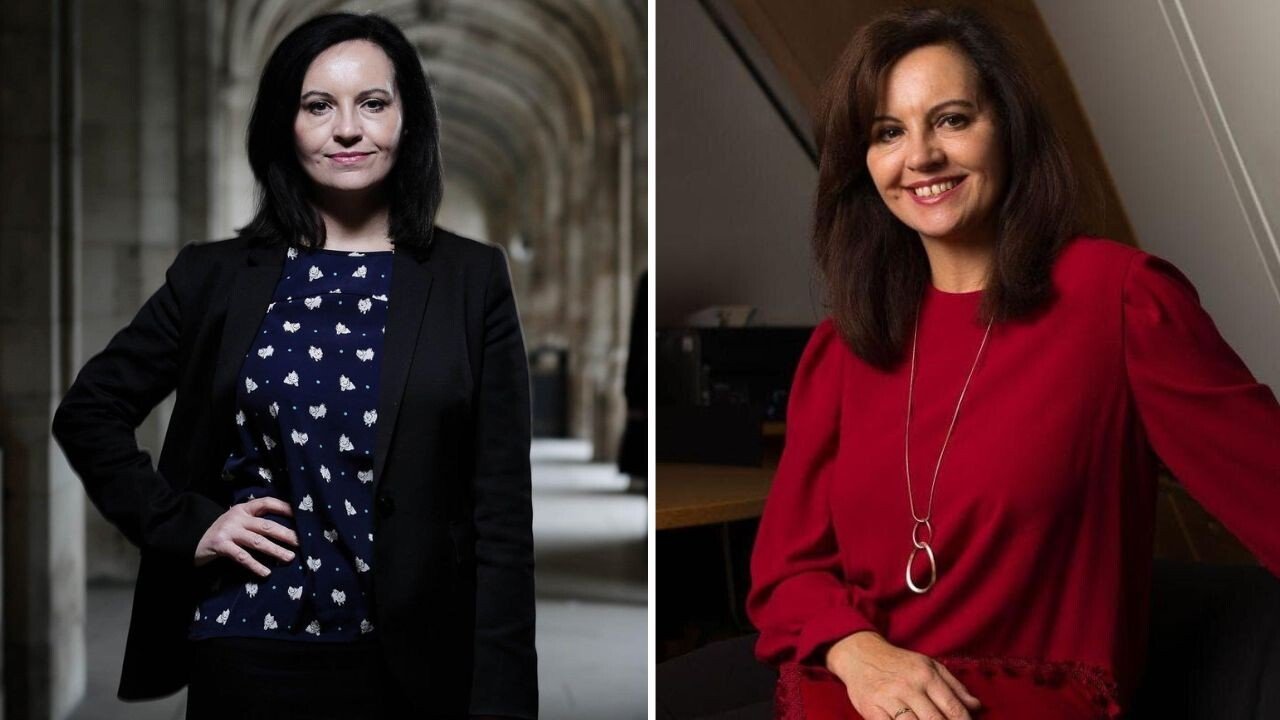
Caroline Flint is a former British Labour politician who represented Don Valley in Parliament for more than two decades. She held several government ministerial positions, including Minister for Public Health, Minister for Housing and Minister for Europe, before moving into senior public-sector responsibilities.
Since leaving Parliament in 2019, she has remained involved in healthcare governance and energy policy. As of November 2026, she chairs Humber Teaching NHS Foundation Trust and the Committee on Fuel Poverty, continuing her work in areas closely connected to her previous political responsibilities.
| Field | Details |
|---|---|
| Full Name | Caroline Flint |
| Date of Birth | 20 September 1961 |
| Age | 65 years (as of November 2026) |
| Nationality | British |
| Political Party | Labour Party |
| Former Constituency | Don Valley |
| Parliamentary Service | 1997–2019 |
| Previous Roles | Government Minister and Shadow Cabinet Member |
| Current Positions | Chair of Humber Teaching NHS Foundation Trust and Committee on Fuel Poverty |
| Recognition | Honorary Fellow of the Royal College of General Practitioners |
Who Is Caroline Flint?
Caroline Flint was born on 20 September 1961, making her 65 years old as of November 2026. She is known primarily for her career in British politics, particularly her long association with the Labour Party and her work in government.
First elected to Parliament in 1997, she became the first woman to represent Don Valley in the House of Commons. She remained the constituency’s MP until 2019, serving through successive Labour and Conservative governments.
Her political responsibilities covered public health, employment, housing and European affairs. Following her departure from Westminster, she took on leadership positions in the NHS and government advisory bodies.
Caroline Flint’s Political Career and Government Roles
Flint entered the House of Commons on 1 May 1997 as the Labour MP for Don Valley. Her first government appointment came in June 2003, when she became Parliamentary Under-Secretary of State at the Home Office.
In May 2005, she moved to the Department of Health as Parliamentary Under-Secretary. A year later, she was appointed Minister of State for Public Health, serving from May 2006 until June 2007.
During this period, she contributed to the legislation and preparations associated with restricting smoking in enclosed public places in England. The measures, introduced under the Health Act 2006, came into effect in July 2007.
Her responsibilities subsequently expanded into other departments. Between June 2007 and January 2008, she served as Minister for Employment and Welfare Reform. She also held regional ministerial responsibilities for Yorkshire and the Humber.
In January 2008, Flint became Minister for Housing, a position she held until October that year. She then served as Minister for Europe in Gordon Brown’s government.
Her ministerial career ended in June 2009 when she resigned from that position. She later discussed the circumstances surrounding her departure in a December 2009 interview with LabourList.
Shadow Cabinet Responsibilities and Political Views
Following Labour’s departure from government in 2010, Flint continued working in senior opposition positions.
She became Shadow Secretary of State for Communities and Local Government in October 2010, holding the position for one year. In October 2011, she was appointed Shadow Secretary of State for Energy and Climate Change, remaining in that role until September 2015.
Her responsibilities included scrutinising government policy on energy and climate change, subjects that would later become relevant to her work on fuel poverty.
Flint also contested Labour’s deputy leadership election in September 2015. She finished third in the final round, while Tom Watson won the contest.
Her position on Brexit became another significant part of her political record.
Although she supported remaining in the European Union during the 2016 referendum, she subsequently argued that Parliament should respect the result. She favoured a negotiated withdrawal rather than leaving without an agreement.
In a House of Commons speech on 4 September 2019, Flint explained the distinction between her original support for Remain and her belief that the referendum result should be implemented.
Why Did Caroline Flint Leave Parliament in 2019?
Flint’s parliamentary career ended following the general election held on 12 December 2019.
She had represented Don Valley for approximately 22 years, but the constituency elected Conservative candidate Nick Fletcher.
According to the official parliamentary results, Fletcher received 19,609 votes, compared with Flint’s 15,979 votes, giving the Conservatives a majority of 3,630.
Her parliamentary term had formally ended on 6 November 2019, ahead of the election.
The result brought a lengthy period of Labour representation by Flint to an end. It also marked her departure from elected national politics.
Flint later discussed Brexit and Labour’s leadership in connection with the election. These were her political assessments rather than established explanations for how individual voters made their decisions.
Caroline Flint’s Husband, Previous Marriage and Children
Caroline Flint has discussed aspects of her family life in established interviews and newspaper profiles.
Historical reporting identifies Phil Cole as her husband. They married in 2001.
Before that marriage, she was married to Saief Zammel, who was described in biographical reporting as a Tunisian stockbroker. Their marriage ended in divorce in 1990.
Flint has two children, Karim and Hanna, and a stepson named Nick.
Her experience of raising children while managing financial and professional responsibilities has also featured in her public reflections.
In a LabourList interview published in December 2009, she described a period when she was bringing up two young children alone and receiving benefits.
In her 2009 interview, Flint connected her return to employment with greater independence and financial stability. She also discussed how those experiences informed her views on employment and welfare.
Childhood Experiences and Personal Reflections
Flint has spoken about difficult experiences during her childhood and their influence on her outlook.
In a November 2017 interview with the London Evening Standard, she discussed growing up with a mother who experienced alcohol dependence.
She also reflected on her mother’s illness and death, describing the lasting effect of those experiences on her life.
Her personal history has occasionally featured in discussions of her political beliefs, particularly those concerning employment, family responsibilities and opportunities for people facing difficult circumstances.
Flint has also spoken candidly about the demands of government office.
During her December 2009 LabourList interview, she described the challenge of learning how a government department operates after taking on ministerial responsibilities.
She expressed concern that frequent ministerial reshuffles could interrupt important work because ministers need time to understand complex policies and develop effective relationships within their departments.
In the same interview, Flint discussed why she had resigned from Gordon Brown’s government.
According to her account, a conversation in which Brown questioned her loyalty and commitment contributed to the decision. She also expressed frustration about participation in Cabinet discussions.
Those comments represented Flint’s own explanation of her departure rather than an independently established account of the private conversation.
What Does Caroline Flint Do Today?
Following her departure from Parliament, Flint moved into senior responsibilities involving healthcare and energy affordability.
She became Chair of Humber Teaching NHS Foundation Trust in September 2021.
The Trust provides healthcare services, while its board is responsible for organisational oversight and governance. As Chair, Flint leads the Trust Board and Council of Governors, supporting the organisation’s strategic direction and accountability.
She was reappointed for a second three-year term beginning in September 2024.
Another major responsibility began on 31 January 2022, when she became Chair of the Committee on Fuel Poverty.
The committee provides independent advice to the UK Government on policies intended to reduce fuel poverty in England.
Its work addresses issues such as household energy affordability, improvements to the energy efficiency of homes and support for households struggling with energy costs.
Flint was reappointed to the committee in 2025. Her current stated term runs until 31 January 2028.
She is also listed as an advisory board member of Re, a think tank concerned with public-sector reform.
These positions have enabled her to remain involved in public policy and institutional leadership without holding an elected parliamentary seat.
Public Service, Policy Work and Professional Recognition
One of Flint’s recognised contributions to public policy came during her time as a health minister.
She participated in work surrounding the Health Act 2006 and the introduction of restrictions on smoking in enclosed public places in England.
The legislation and its implementation involved several government departments, parliamentarians and public-health organisations.
Her contribution received formal recognition in September 2024, when the Royal College of General Practitioners awarded her an Honorary Fellowship.
The award was presented on 6 September 2024, and Humber Teaching NHS Foundation Trust announced it three days later.
In her statement accompanying the recognition, Flint expressed pride in her role in advancing smoke-free legislation.
Her public-service activities have extended beyond healthcare and energy policy.
In July 2022, she was appointed to the UK Commission on Covid Commemoration.
The commission considered how the country should commemorate the pandemic and recognise the experiences of those affected by it.
Its final report was published in September 2023, setting out recommendations developed through the commission’s work and consultation.
Flint’s membership formed part of that collective initiative, which was separate from the independent COVID-19 Public Inquiry.
Caroline Flint’s Work and Responsibilities in 2026
Flint remained active in public-sector governance and advisory work throughout 2026.
A significant development came in September, when the Committee on Fuel Poverty published its annual report, Warm. Affordable. Fair. The journey to eliminate fuel poverty.
Released on 3 September 2026, the report examined challenges associated with reducing fuel poverty in England.
Its subjects included household energy costs, improvements to the energy efficiency of homes and the effectiveness of government measures addressing fuel poverty.
Flint contributed a signed introduction discussing the committee’s advisory responsibilities and its scrutiny of relevant policies.
Official committee minutes also document her participation in meetings during the year.
At a meeting on 29 June 2026, members considered research, support for improving cold homes ahead of winter 2026–27 and preparations for the annual report.
These discussions formed part of the committee’s continuing work to assess progress and advise the government.
Alongside her committee responsibilities, Flint continued serving as Chair of Humber Teaching NHS Foundation Trust.
The Trust’s board directory identified her in that position as of November 2026. She was also listed as an advisory board member of Re.
Her activities during the year centred on healthcare governance, energy affordability and public-sector policy.
Caroline Flint’s Career and Continuing Public Service
After more than two decades in Parliament, Caroline Flint moved into leadership roles outside elected politics. Her responsibilities at Humber Teaching NHS Foundation Trust and the Committee on Fuel Poverty connect her earlier experience in public health and energy policy with her continuing public-service work.
You may also read: Liv Garfield: Severn Trent Leadership, Salary and Life Beyond the CEO Role.
1 Comment