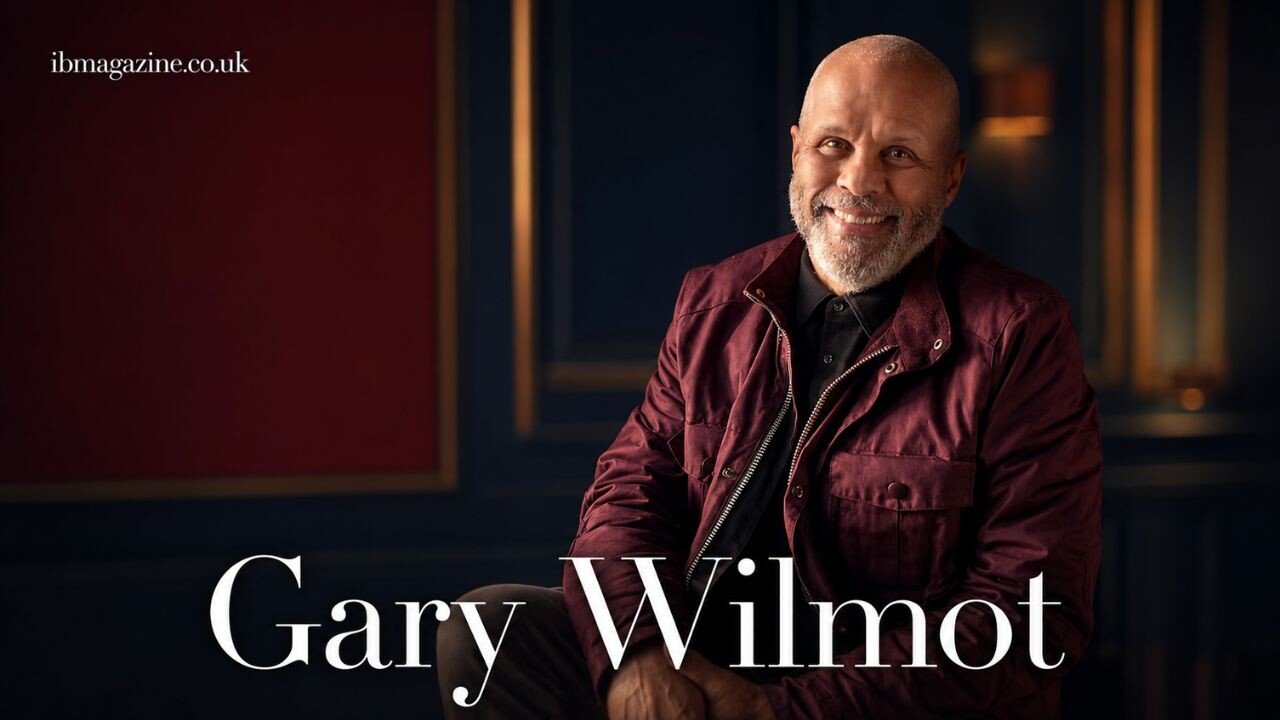
Gary Wilmot entered professional entertainment after years of factory, warehouse and building-site work. He had left school at 15 with limited reading and writing skills, and nothing in his early employment suggested that television presenting or playwriting would eventually become part of his working life.
A friend’s recommendation to an agent created the first opening. Wilmot received specialist tuition, developed a comedy career and later became a familiar television presenter. Decades afterwards, he began pursuing original writing more deliberately, leading to his London playwriting debut in 2026. His professional development was gradual rather than the result of a single planned decision.
| Field | Details |
|---|---|
| Birthplace | Kensington, London |
| Childhood area | Lambeth, London |
| Early employment | Factories, warehouses, building sites and scaffolding |
| Established work | Comedy, television presenting, writing and directing |
| Height | 5 feet 10 inches |
| Official honour | Member of the Order of the British Empire |
| Charitable affiliation | Ambassador for Acting for Others |
A Lambeth Childhood Before Manual Work
Gary Wilmot was born in Kensington on 8 May 1954, but he grew up on an estate in Lambeth. Wilmot has said that his Jamaican father, Harry Wilmot, arrived in Britain aboard the Empire Windrush in 1948 and that his mother was white British.
His father died while Wilmot was still a child. In different interviews, he recalled being six or seven at the time, so the most reliable description is that the loss occurred during his childhood. His mother then raised Gary and his brother largely by herself. Wilmot recalled that his mother’s health limited the amount of paid work she could undertake and that the household depended heavily on family allowance.
He has also described a strong sense of community on the Lambeth estate. Neighbours were commonly treated as extended family, and children could turn to nearby adults when their parents were unavailable. That support existed alongside the difficulties of growing up as one of two Black boys with a white mother in a predominantly white neighbourhood.
Formal education did not provide him with a clear professional path. Wilmot left school at 15 and later said that he could barely read or write at that stage. He moved into factories, warehouses and building sites, eventually working as a scaffolder and forklift driver.
The repetition of industrial work made him consider what his future might look like. He remembered watching older colleagues rush to collect their wages and deciding that he did not want to be in the same position at 40. He had no established alternative, but he knew that he wanted a different working life.
A Friend’s Recommendation Opened a New Direction
The change began through a personal recommendation rather than a formal career plan. One of Wilmot’s friends met an agent and described him as funny. The friend then passed the agent’s details to Wilmot, who was approximately 20 or 21 and still doing manual work.
The agent connected him with an impressionist who offered tuition to young performers. Wilmot paid for lessons, learnt the practical foundations of the work and began appearing before audiences. He later explained that making people laugh gave him an immediate sense of connection and direction.
His progress brought him to a national television talent programme in 1978, where he appeared as part of a comedy partnership. Later accounts differ over whether he won the programme or reached its final, but his participation and the professional attention that followed are established.
The opportunity did not turn his career into an overnight success. Instead, it gave him a public platform from which he could continue developing. Comedy and impression work led to further television opportunities, eventually taking him away from the industrial jobs that had defined his early working years.
Television Presenting Broadened His Career
Television presenting became an important part of Wilmot’s public career. His professional CV records work across children’s programming, variety formats and programmes built around his own presenting style. He also received writing credits, demonstrating that his responsibilities extended beyond appearing in front of a camera.
His presenting credits included children’s and variety programming for the BBC and ITV. Curtis Brown also records television writing credits alongside his presenting work.
When those formats became less common, he continued seeking other forms of professional work. Wilmot has not described these changes as part of a carefully prepared strategy. In his account, opportunities appeared, and he adapted his existing abilities to meet them.
Official recognition arrived through the 2018 Birthday Honours. The Gazette and the Cabinet Office recorded his appointment as a Member of the Order of the British Empire for services to drama and charity. The citation recognised both his professional contribution and charitable involvement, although it did not provide a detailed list of the individual activities considered.
Childhood Experiences Shaped His Outlook
In later interviews, Wilmot linked his adult outlook to childhood bereavement, racial abuse and the support he experienced within his Lambeth community.
He recalled encountering racist taunts while growing up. Rather than presenting himself as passive, he said that he frequently answered insults with sharper remarks of his own. Looking back, he considered it possible that this habit helped develop the quick verbal responses later used in his comedy. That connection is his own interpretation of his childhood rather than an external assessment.
His understanding of his parents changed after he had children. When they reached the age at which he had lost his father, he began thinking more closely about what his mother and father had experienced. He recognised that he had grown up without seeing the everyday example of two parents managing responsibilities, disagreements and difficult periods together.
His mother died in 1978, as his national television opportunities were beginning. He later said that he wished she had lived to see that professional development.
Wilmot has also discussed racial representation in professional work. He recalled that the effect of being Black became especially noticeable to him during the 1990s, when skin colour could restrict the opportunities available. His later comments have supported broader access for Black and Brown professionals while also emphasising ability, understanding and emotional communication.
Later Ambition Led Him Towards Playwriting
Although his career began in his early twenties, Wilmot said in 2026 that he did not regard himself as ambitious until he was about 60. He had continued working and looking for unfamiliar challenges, but the deliberate desire to develop his own projects arrived comparatively late.
Original writing provided one such direction. Before his London debut as a playwright, two of his pieces had been presented at a village hall in Tring. These smaller projects allowed him to develop ideas without suggesting that a major London production was guaranteed.
The concept behind his 2026 London project began around seven years earlier. During a technical period at work, he noticed how much time people spent waiting and became interested in the different ways they responded to it. He considered the simplicity of waiting strong enough to support a story about human behaviour and connection.
The finished work ran in London from 26 February to 22 March 2026, marking his London playwriting debut. It represented a new stage in his professional life without erasing his earlier work as a comedian, presenter, writer and director.
His approach to project development has included a willingness to question his own involvement. In one workshop, he told the creative team that his contribution seemed disconnected from the rest of the material, despite knowing that the criticism might remove his job. The contribution was subsequently cut, and he said he did not regret raising the issue because the quality of the wider project mattered more to him.
Charity and Continuing Public Work
Charitable activity forms part of Wilmot’s verified public record. Acting for Others lists him as an ambassador, connecting him with an organisation that supports people facing hardship within the professional stage community. The available profile confirms the position but does not describe his individual ambassadorial duties.
In December 2025, he participated as a writer and Q&A panellist at a gala raising funds for The Pepper Foundation and Inspire Bucks. The official event record confirms his involvement, although it does not state how much money was raised or whether he helped organise the fundraising.
His public work has also continued through event presenting. Food Management Today selected him to host its 2025 industry awards, held on 26 June 2025. In an accompanying interview, Wilmot discussed his working habits and home routine, including sharing food shopping with his wife around their irregular professional schedules.
These engagements document that charitable and public-facing work remained part of his professional activity after he received the MBE in 2018.
A Career Still Moving in New Directions
Gary Wilmot did not move directly from school into a clearly defined profession. Manual employment, a friend’s recommendation, specialist tuition and national television exposure each altered his available choices. Presenting broadened those opportunities, while writing eventually gave him greater control over the ideas he wanted to develop.
His London playwriting debut in 2026 arrived more than five decades after he first began pursuing comedy professionally. It matched his own description of becoming more ambitious later in life and continuing to look for unfamiliar challenges rather than relying on one established type of work.
You may also read: Keith Richards on Family Life and Four Decades in Connecticut.