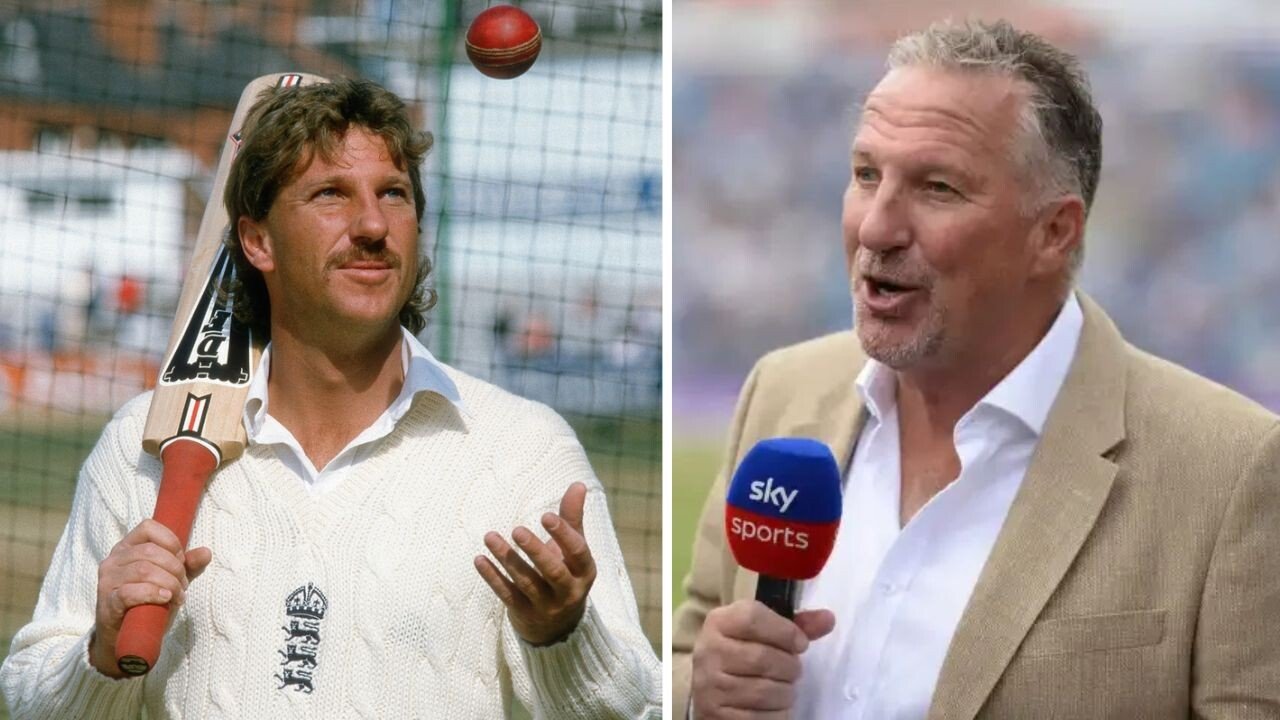
Ian Botham is a former England cricketer whose international career combined substantial achievements with both bat and ball. An all-rounder and former national captain, he became closely associated with England’s 1981 Ashes victory and finished his Test career with 5,200 runs and 383 wickets.
His public work extended well beyond playing. Blood-cancer fundraising, cricket commentary, leadership at Durham and membership of the House of Lords became significant parts of his later career. Blood Cancer UK credits his fundraising challenges with raising more than £13 million.
Quick Facts
| Field | Details |
|---|---|
| Full name | Ian Botham |
| Nationality | English |
| Profession | Former international cricketer, broadcaster, charity campaigner, and life peer |
| International team | England |
| Playing role | All-rounder |
| International career | 1976–1992 |
| Test appearances | 102 |
| Test runs | 5,200 |
| Test wickets | 383 |
| Test centuries | 14 |
| Major cricket achievement | Key figure in England’s 1981 Ashes victory |
| Cricket recognition | ICC Cricket Hall of Fame inductee |
| Hall of Fame induction | 28 October 2009 |
| Charity role | Founding President of Blood Cancer UK |
| Fundraising | Credited with raising more than £13 million through fundraising challenges |
| Foundation | Beefy’s Charity Foundation |
| Parliamentary role | Crossbench life peer in the House of Lords |
| Joined House of Lords | 10 September 2020 |
| Durham Cricket | Former chairman; became Honorary President in December 2024 |
Ian Botham’s International Cricket Career
Botham represented England internationally from 1976 to 1992, serving as both an all-rounder and captain. Across 102 Tests, his batting and bowling produced major individual records and performances that helped shape important series.
Recognition followed both his sporting achievements and his charitable work. His knighthood for services to charity and cricket was announced in June 2007, and he was formally knighted at Buckingham Palace that October.
On 28 October 2009, he was inducted into the ICC Cricket Hall of Fame at Headingley, the ground associated with one of his most memorable innings.
Ian Botham’s Career Stats and Major Records
The ICC records Botham’s Test career totals as 5,200 runs, 383 wickets and 14 centuries. Those figures capture the two substantial parts of his contribution: scoring runs as a batsman and taking wickets as a bowler.
He was, at the time, the fastest player to achieve the Test double of 1,000 runs and 100 wickets. He also held the world record for the most Test wickets during part of his career.
These were historical records rather than permanent distinctions. His overall figures remain a clear measure of a career in which neither batting nor bowling was merely a secondary responsibility.
Why the 1981 Ashes Became Central to His Legacy
England beat Australia 3–1 in the 1981 Ashes, with Botham making decisive contributions across several Tests.
At Headingley, he scored 50 in the first innings and an unbeaten 149 in the second, alongside seven wickets across the match. His batting became the defining image of that contest, although it was only one part of England’s victory.
At Edgbaston, he produced a spell of five wickets for just one run. He followed that with 118 at Old Trafford and took ten wickets in the final Test at The Oval.
Despite the series becoming widely known as “Botham’s Ashes”, he later emphasised the collective achievement. In a 2025 interview with Cyclist, he specifically recognised Bob Willis’s eight wickets at Headingley, drawing attention to a teammate’s essential contribution to the result.
Captaincy, Pressure and Professional Growth
Botham’s assessment of his England captaincy was candid. Speaking to Wisden in 2020, he said the responsibility had affected his individual performances. Looking back, he felt he might have been better suited to supporting a captain than holding the position himself.
He praised Mike Brearley’s ability to understand players and bring out their strengths. His reflections distinguished the demands of leadership from the qualities that had helped him succeed individually.
Competitive pressure was something he described differently. In his 2025 Cyclist interview, Botham said he accepted pressure as part of elite sport and recalled using criticism during the 1981 Ashes as motivation.
He also credited listening with helping his development. During his early international appearances, conversations with experienced players, including Australian cricketers, gave him opportunities to absorb knowledge. Reflecting on setbacks in the Wisden interview, he said he preferred learning from good and bad experiences to dwelling on how his career might have unfolded differently.
Health Challenges During His Playing Career
In his 2020 Wisden interview, Botham spoke about playing through a serious spinal problem. He described himself as fortunate to have sustained a lengthy career despite it.
His account concerned a physical challenge during his playing years and formed part of his broader reflections on injuries and career setbacks.
From Cricket to Broadcasting and Public Life
After playing, Botham spent 23 years in cricket commentary. Broadcasting kept his working life closely connected to the sport and its schedules.
By 2020, he was describing his departure from that role as a welcome transition. He told Wisden that it was appropriate to make room for younger voices and that stepping away had given him greater freedom after decades organised around playing and commentary commitments.
His subsequent public responsibilities included a place in the House of Lords, while charitable work remained a continuing focus.
Ian Botham’s Charity Work
Botham’s involvement with blood-cancer fundraising began after he encountered children with leukaemia at a hospital in Taunton. Blood Cancer UK dates that visit to 1977, although he recalled it more broadly as taking place in the 1980s during his maiden parliamentary speech.
His first major fundraising walk took place in 1985, covering the route from John O’Groats to Land’s End. According to Blood Cancer UK, it raised more than £1 million.
The charity now credits his fundraising challenges with raising more than £13 million in total. That figure covers his accumulated fundraising, including the first major walk.
He became the organisation’s first President in 2003 and is now identified as its Founding President. Supporting medical research also became part of his parliamentary work, where he spoke about the importance of funding research into serious illnesses.
Beefy’s Charity Foundation and Supported Causes
Established by Lord and Lady Botham, Beefy’s Charity Foundation was registered with the Charity Commission for England and Wales on 4 April 2013. Its work centres on making grants, with charitable purposes that include health and saving lives.
Supported causes include Blood Cancer UK, the Batten Disease Family Association, Yorkshire’s Brain Tumour Charity and diabetes-related work associated with Breakthrough T1D, formerly JDRF. The Foundation identifies Lady Botham as its President.
Fundraising continued around the 40th anniversary of the 1985 walk. A cycling event associated with Botham and Sir Bradley Wiggins took place on 15–16 September 2025, and Botham discussed it in his Cyclist interview that August.
Charity Commission accounts for the year ending 31 March 2025 recorded income of £167,096 and expenditure of £175,001 for the Foundation.
Parliamentary and Advocacy Work
Botham joined the House of Lords on 10 September 2020 as a Crossbench life peer. Parliamentary records reviewed in October 2026 continued to list him in that role.
In his maiden speech on 3 November 2020, he said charitable work would remain part of his contribution to the House. He discussed his association with Blood Cancer UK and the importance of medical research funding.
His later parliamentary activity included written questions submitted in June 2025 about access to cerliponase alfa, also known as Brineura, for children with CLN2 Batten disease.
The questions addressed treatment eligibility after January 2026, equality considerations, alternative treatments and the Rare Diseases Framework. They also asked about discussions involving NHS England and NICE. These were formal requests for information and government responses on treatment access.
His Role at Durham Cricket
Botham served as Durham Cricket chairman from 2017 until 20 December 2024. He then became Honorary President, with Phil Collins taking over as chair.
When the change was announced, ECB chair Richard Thompson credited the period of Botham’s chairmanship with accompanying Durham’s sporting and organisational recovery. His assessment included the club’s return to the First Division and its stronger footing.
The honorary presidency maintained Botham’s formal connection with Durham after his chairmanship ended.
Family Values and Personal Reflections
Botham has spoken about the personal cost of long international tours. In a 2017 Guardian interview, he recalled spending extended periods away while his children were young and missing parts of their early lives.
Becoming a grandfather, he said, gave him a chance to be more present. He described the wider family as close at the time of the interview.
His stated approach to younger relatives was to encourage independence. He disliked the idea of parents trying to recreate their own sporting careers through their children, preferring to offer advice when asked.
During the same interview, published while he was supporting Alzheimer’s Society’s United Against Dementia campaign, Botham discussed the distress caused by his father’s dementia. He spoke about wanting to preserve memories of his father before the illness’s severe later stages.
Ian Botham’s Lasting Impact
Botham’s career extends across several distinct forms of public involvement: international cricket, broadcasting, charitable fundraising, club leadership and parliamentary work.
The 1981 Ashes remain central to his sporting story, but his sustained support for health-related causes gives his life beyond playing a substantial place in that account. His later roles at Durham and in the House of Lords continued that involvement after his playing and commentary careers had ended.
You may also read: Leo Kearse: National Security, Comedy, GB News and Free Speech.
1 Comment