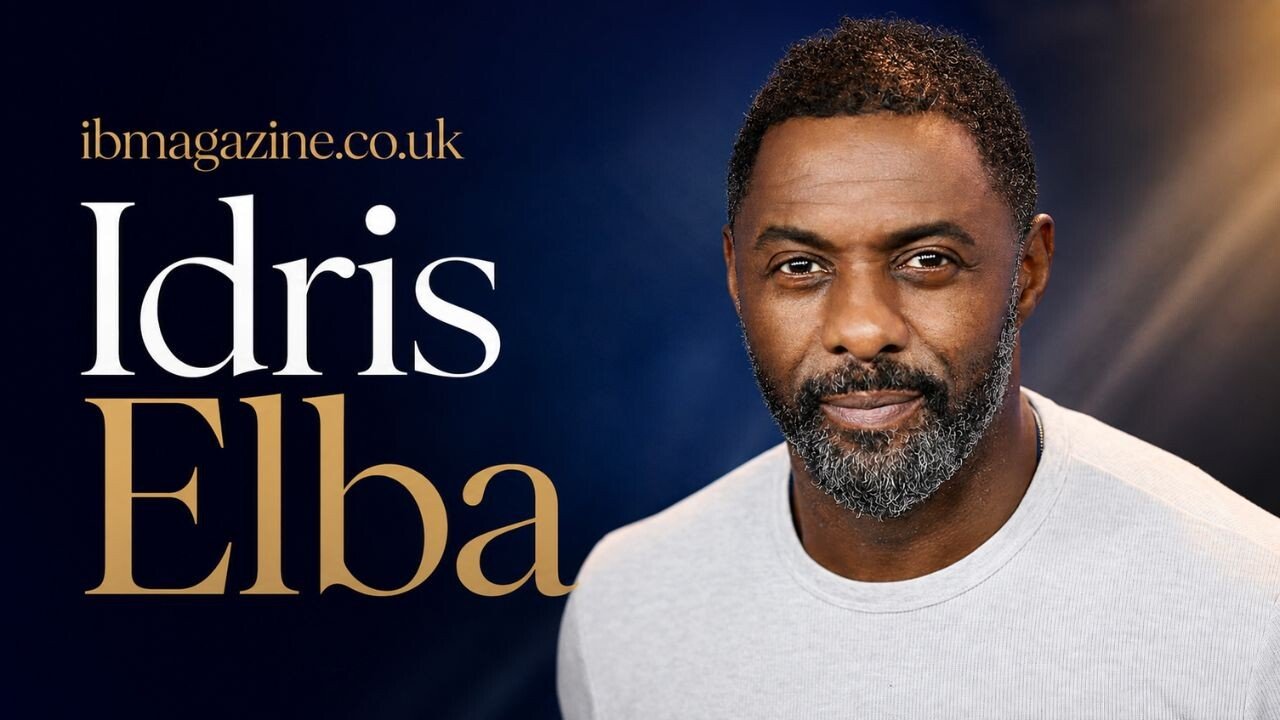
Idris Elba has increasingly linked his public work with opportunities for younger people, and one of the clearest examples is Number 10, a community-focused project he discussed publicly in 2026. The initiative is being developed on Golborne Road in west London and was described by Elba as a multi-use space intended partly to give younger people access to opportunity, inspiration and community.
The project sits within a wider body of verified public work. Elba has been involved in youth advocacy, anti-knife-crime initiatives, charitable activity and development projects in the UK and Sierra Leone. His contribution to young people was formally recognised in the 2026 New Year Honours, when he was named for a knighthood for services to young people.
| Field | Details |
|---|---|
| Full name | Idris Akuna Elba; he has also given his fuller name as Idrissa Akuna Elba |
| Birthplace | London |
| Heritage | Ghanaian and Sierra Leonean |
| Nationality | British; later granted Sierra Leonean citizenship |
| Family background | Only child of Eve and Winston Elba |
| Public honour | Knight Bachelor for services to young people |
| Charity role | Trustee and Chair of the Elba Hope Foundation |
| Current community project | Number 10 on Golborne Road, west London |
Idris Elba’s background and public profile
Idris Elba was born in London in September 1972. He has personally said that his fuller name is Idrissa Akuna Elba, while current UK corporate records use the form Idris Akuna Elba. He has also described himself as half Ghanaian and half Sierra Leonean.
Elba has spoken directly about his East London roots and has described himself as a Hackney boy, although he has said that he was actually born at Forest Gate Hospital. His parents came to Britain from West Africa. In an interview, he said his mother, Eve, worked as a clerical assistant, while his father, Winston, was employed at Ford’s Dagenham plant.
He has also described himself as his parents’ only child. That part of his upbringing has remained relevant to how he speaks about imagination, family and responsibility later in life.
His connection to Sierra Leone extends beyond family heritage. In December 2019, the country’s National Tourist Board announced that President Julius Maada Bio had conferred Sierra Leonean citizenship on him and appointed him a Brand Ambassador for the country.
By 2026, his public profile also carried a formal title. The UK Government announced on 29 December 2025 that he would receive a knighthood for services to young people. He was made a Knight Bachelor by King Charles III at Windsor Castle on 2 June 2026.
What Number 10 is and where it comes from
In a June 2026 interview with British GQ, Elba discussed the development of Number 10, a project based in a former venue on Golborne Road in west London.
He described the planned space as a multi-use community hub rather than simply a private commercial undertaking. Part of its purpose, according to his own comments, is to give younger people a place connected with opportunity and inspiration.
The project also has a formal business structure behind it. Companies House records 10NUMBER10 LIMITED as an active company and lists Elba as a director from 14 August 2025.
The available 2026 information described Number 10 as still being developed. It was therefore an active project rather than a completed community facility at the time of the latest verified interview.
Why Elba says the project matters
Elba has increasingly spoken about what older generations leave behind for younger people. In his 2026 GQ interview, he said that legacy had become more important to him and connected that idea with practical opportunities for the next generation.
Number 10 fits that stated priority because its purpose is tied directly to access and community. Rather than discussing youth opportunity only in general terms, Elba described a physical space intended to provide younger people with something they could use.
His comments also place the project within a broader concern about what young people experience in their communities. He has spoken about youth violence, parental responsibility and the importance of creating better options for younger people.
Those ideas have become an increasingly visible part of his public work rather than a single short-term campaign.
How youth advocacy became central to his public work
Elba’s work with young people received formal recognition when he was included in the 2026 New Year Honours for services to young people.
The honour was announced in December 2025, and his investiture followed at Windsor Castle in June 2026. The wording of the honour is particularly relevant to his current public profile because it recognises his contribution outside his better-known professional activities.
His interest in youth opportunity has also appeared repeatedly in his own interviews. He has spoken about thinking more seriously about legacy and about the kind of future his generation helps to create.
That focus gives important context to Number 10. The west London project is not presented in isolation but sits alongside other documented work concerning young people, community participation and long-term social improvement.
His role in anti-knife-crime work
One of the clearest areas of Elba’s youth advocacy has been anti-knife-crime work.
On 9 September 2024, the UK Government identified him as an anti-knife-crime campaigner when the Coalition to Tackle Knife Crime was launched at Downing Street. The initiative brought together affected families, young people, community representatives, public services and other organisations.
The coalition was intended to examine the causes of youth violence and help inform future policy. Elba was involved in that public effort alongside his role as co-founder of the Elba Hope Foundation.
He has also connected the issue personally with fatherhood. In 2026, he spoke about youth violence in the context of being a parent himself, placing his advocacy within concerns he had expressed directly rather than attributing motives to him from outside.
The wider work behind Number 10
Elba’s public work also includes a formal role with the Elba Hope Foundation.
The Charity Commission lists Idris Akuna Elba as a trustee and Chair of the registered charity, with his appointment dating from 5 October 2022. Sabrina Dhowre Elba is also listed as a trustee, while the foundation’s own website identifies Idris and Sabrina as co-founders.
The Charity Commission describes the foundation’s activities as including community empowerment, education, sustainable development, agriculture, conservation and youth advocacy.
Its financial records are separate from Elba’s personal finances. For the year ending 31 December 2024, the charity reported £208,989 in income and £738,579 in expenditure. The regulator also recorded that trustees received no remuneration, payments or benefits during that reporting period.
Those records provide institutional confirmation that Elba’s charitable involvement includes formal governance responsibilities rather than informal support alone.
Other long-term projects linked to opportunity and development
Elba’s public projects also extend to Sierra Leone, where he has been involved with the Sherbro Island development initiative.
Sierra Leone’s Office of the President confirmed that Elba met President Julius Maada Bio on 26 June 2025 following parliamentary ratification of the Sherbro Island investment project. Elba publicly thanked the government and parliament and described the ratification as a milestone after years of work.
National Geographic later reported in March 2026 that Idris and Sabrina Elba were continuing work connected with a wider sustainable-development vision for the island.
One part of that work is the Hope Power Project, described as a three-year initiative launched in 2025 to expand electricity and wireless connectivity on Sherbro Island.
Elba has also previously worked with the International Fund for Agricultural Development. IFAD now places him among its legacy ambassadors, advocates and envoys rather than its current active ambassadors.
In a first-person TIME essay in 2024, he argued for greater investment in rural communities and small-scale agriculture and described food insecurity as an important reason for his activism.
Direct insights that help explain his focus
Elba’s own interviews provide useful context for the priorities behind his recent public work.
In 2026, he said being an only child encouraged him to develop a large imagination. He has also spoken about fatherhood as a source of motivation and purpose, particularly during difficult periods.
His relationship with his father was another important influence. In the same 2026 interview, Elba said witnessing Winston Elba’s death roughly 13 years earlier changed his life. He had returned to England during his father’s illness and described their relationship as especially close.
He has also become more open about his professional habits. In an October 2023 podcast interview, Elba described himself as an “absolute workaholic” and said that some of his extreme working habits had become unhealthy. At that time, he said he had been attending therapy for around a year and was trying to develop a healthier relationship with work and rest.
Those comments belong specifically to that period and do not establish his current circumstances in 2026, but they do provide a first-hand account of how he had begun reconsidering his priorities.
By 2026, his comments had shifted strongly towards legacy and younger generations. He said he was thinking more about what his generation would leave behind, which provides clear context for both Number 10 and his wider youth-focused work.
Conclusion
Number 10 is one of the clearest current examples of Idris Elba turning his stated interest in youth opportunity into a practical community project. In 2026, he described the Golborne Road development as a multi-use space intended partly to help younger people gain access to inspiration and opportunity.
The project sits alongside his anti-knife-crime advocacy, formal role with the Elba Hope Foundation, work connected with Sierra Leone and wider interest in long-term community development.
His knighthood for services to young people placed official recognition behind that part of his public work. Number 10 therefore belongs to a broader and well-documented shift towards youth opportunity, community participation and the question of what his generation leaves for the next.
You may also read: Chips Hardy Turned an Advertising Career Back Towards Writing.
1 Comment