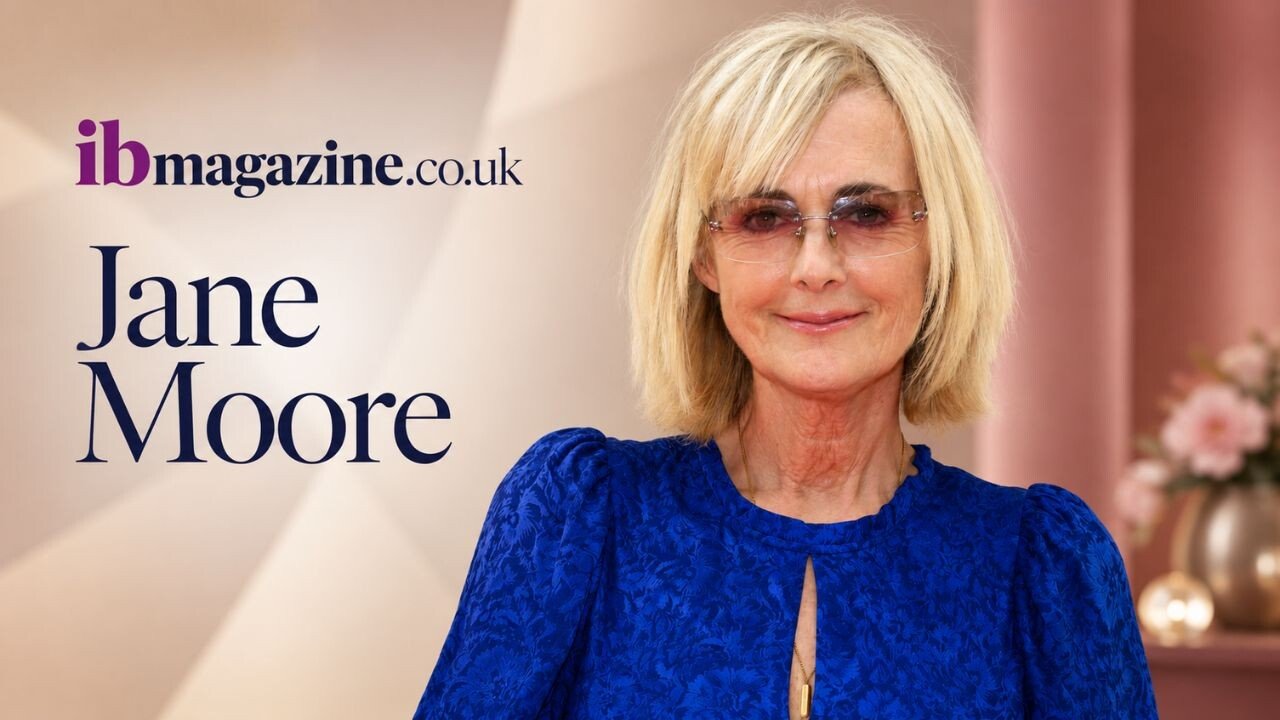
Jane Moore is a British journalist, columnist, broadcaster and author whose career began in local newspapers before expanding into national reporting, editorial work, opinion writing and factual broadcasting. Her professional record stretches back to the early 1980s, while her current work shows that journalism remains central to what she does.
She trained as a reporter before moving through several national newsrooms, later establishing a long-running newspaper column and becoming a familiar broadcasting figure. Alongside that work, she has written books, presented factual programmes and supported veterans through Help for Heroes.
Quick Facts
| Field | Details |
|---|---|
| Name | Jane Moore |
| Profession | Journalist, columnist, broadcaster and author |
| Journalism beginnings | Began as a trainee reporter at the Solihull News |
| Newspaper work | Worked across several national newspapers in reporting, features and editorial roles |
| Broadcasting | Long-standing broadcaster and factual programme presenter |
| Publishing | Author of several published books |
| Public work | Patron of Help for Heroes |
From Local Reporting to National Newspapers
Moore began her professional journalism career as a trainee reporter at the Solihull News, where she worked from 1981 to 1984. From there, she progressed through regional journalism before moving into national newspapers.
Her subsequent newspaper experience included work at the Sunday People, Sunday Sport, The Sun, Today and the Daily Mirror. Rather than remaining in one type of newsroom role, she moved between reporting, features and editorial responsibilities.
Her period at Today was particularly varied. Moore has recalled working there as a royal correspondent, deputy news editor, feature writer and features editor. A contemporary career profile places her at the paper from about 1989 to 1993.
She has spoken directly about the influence of editor David Montgomery during that stage of her career. One lesson she said she took from him was the importance of persistence. She also learnt to approach editors with possible solutions rather than simply identifying problems.
Building a Long-Running Newspaper Career
By the mid-1990s, Moore had moved into sustained newspaper commentary. Contemporary profiles published in the 2000s place the beginning of her long-running Sun column around 1996.
Historical accounts differ slightly on when Moore’s long-running Sun column began. Profiles published in 2006 and 2008 point to approximately 1996, while wording in a 2005 interview could suggest a slightly later start. The available accounts therefore place its beginning in the mid-1990s.
What is much clearer is the longevity of the work. A new opinion column appeared under Moore’s byline on 1 September 2026, with an update on 2 September. Her newspaper career therefore remains active decades after her earliest reporting jobs.
Moore has also been consistent about how she views her profession. In interviews from 2006 and 2008, she described journalism as the part of her working life she valued most strongly and made clear that she regarded herself primarily as a journalist.
Expanding Her Work Into Broadcasting and Factual Journalism
Moore developed a substantial broadcasting career alongside her newspaper work. ITV records her as one of the panellists on the first broadcast of Loose Women on 6 September 1999, alongside Kaye Adams, Nadia Sawalha and Baroness Karren Brady.
Her association with the programme continued across a long period, and ITV was still listing her among its current panellists in September 2026. The broadcaster’s historical material sometimes distinguishes between the first episode and the programme’s wider first-week line-up, but Moore’s presence on the first broadcast itself is clearly documented.
Her broadcasting work has not been limited to panel discussion. ITV also records her presenting factual programmes examining subjects including food labelling, the HPV vaccine, the banking crisis and government overspending.
Those programmes extended her journalism into factual television on public-interest subjects.
Moore has also explained what she believes makes long-running panel discussion effective. During ITV’s 25th-anniversary coverage in 2024, she said authenticity was an important part of the programme’s appeal. In her view, viewers respond to the sense that they are listening to a genuine conversation rather than something heavily scripted.
Career Decisions, Pressure and Professional Growth
Moore has spoken candidly about some of the more difficult stages of her career. In a 2008 interview, she recalled receiving a harsh review of an early television presenting job. Being on the receiving end of public criticism gave her a different perspective on scrutiny and helped reinforce her preference to identify primarily as a journalist.
She has also discussed the pressure of an earlier period working at The Sun under Kelvin MacKenzie. Looking back, she described the environment as exhausting and said she came close to breaking down under the strain.
Those experiences did not stop her from continuing in journalism. Her own account of the lessons learnt from David Montgomery points instead towards persistence and practical problem-solving as habits that became important to her newsroom approach.
Decades later, Moore deliberately stepped into another unfamiliar environment in 2024. Before doing so, she said that being separated from home, her phone and her laptop made her apprehensive. At the same time, confronting that disruption was part of what interested her.
When she reflected on the experience in an October 2025 interview, she spoke about resilience, self-discovery and unexpected personal growth. The same conversation also moved beyond personal experience into professional questions, including media stereotypes, women’s representation and the effects of click-driven publishing culture on journalism.
Her comments offer a more recent perspective from someone whose career began well before digital publishing became central to the news industry.
Writing and Publishing Beyond Daily Journalism
Moore’s professional work also includes book publishing. Penguin Random House records her as the author of several published works, including Fourplay, The Ex Files and The Second Wives Club.
Publishing became another strand of her career rather than replacing newspaper work. Her continuing column activity in 2026 makes that distinction particularly clear.
Her books form a separate strand of a career that has continued to include journalism and broadcasting alongside longer-form writing.
Public Work With Help for Heroes
Outside her core media work, Moore has developed a documented role with Help for Heroes. The charity says she supported its work from its early years before becoming a Patron in 2020.
Her involvement has included fundraising activity, visits to recovery centres and advocacy around awareness of veterans’ mental and physical health needs. Moore has herself described becoming a Patron as an honour.
Her association with the organisation remained active in 2026. On 6 August 2026, Help for Heroes launched an open letter to the UK Prime Minister as part of its People’s Promise to Veterans campaign. Moore was listed among the named co-signatories.
This work gives her public record another dimension beyond journalism and broadcasting, with a formal charitable role that has continued for several years.
Jane Moore’s Career Has Continued to Evolve
Across more than four decades, Moore has kept journalism at the centre of a career that has also included broadcasting, publishing and veterans’ advocacy. Her own interviews consistently identify journalism as her primary professional role, while her newspaper, broadcasting and Help for Heroes work remained active into 2026.
You may also read: Cherry Seaborn Combined Elite Hockey With Sustainability Work.
1 Comment