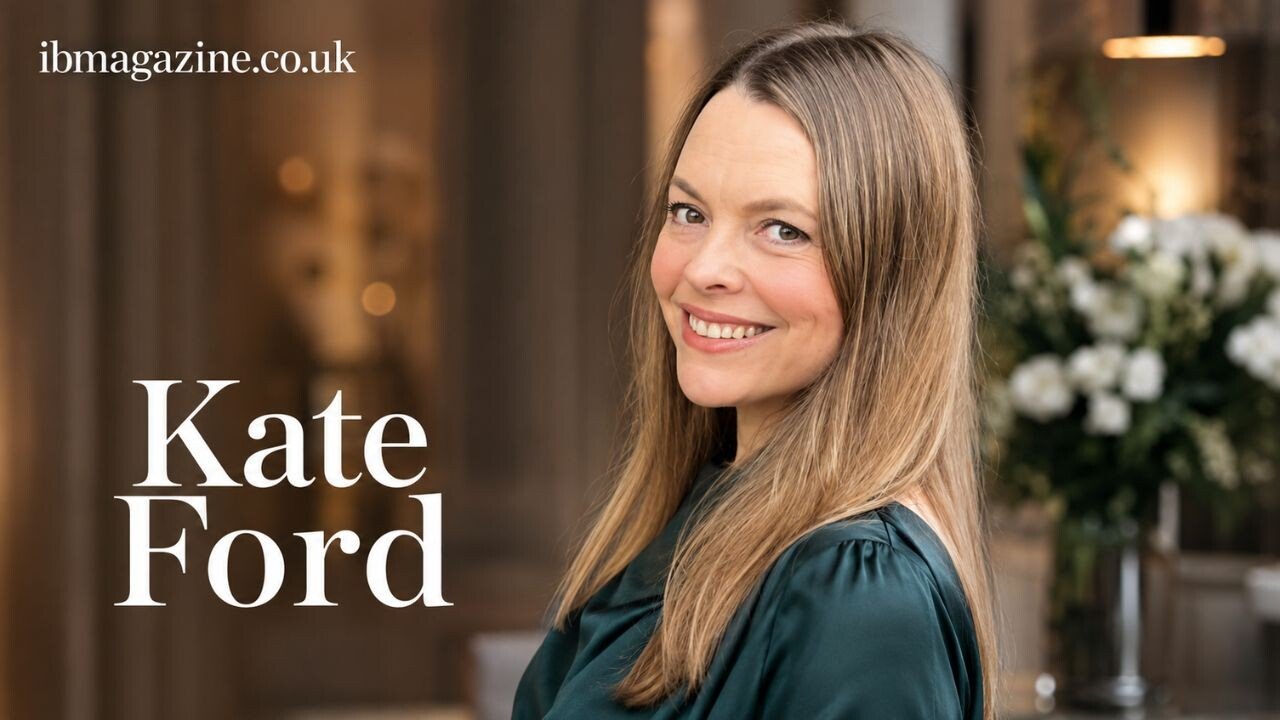
Kate Ford has a documented record of supporting animal-welfare causes that stretches back more than two decades. Her involvement has included campaigns with Compassion in World Farming and PETA UK, as well as direct public statements explaining why certain animal-welfare issues prompted her to take part.
The record begins publicly in 2005 and extends into 2026, when Ford was named among the signatories of a new Compassion in World Farming open letter. Alongside that advocacy, reliable interviews provide a limited but useful picture of her upbringing, family priorities, personal values and a health condition she has chosen to discuss publicly.
| Field | Details |
|---|---|
| Name | Kate Ford |
| Born | 1976 |
| Background | Raised on a farm in the Lake District |
| Education | Studied performing arts at Blackpool College |
| Professional training | Webber Douglas Academy of Dramatic Art |
| Family | Mother of a son, Otis |
| Health | Has publicly spoken about having endometriosis |
| Public advocacy | Long-standing supporter of animal-welfare campaigns |
| Organisations supported | Compassion in World Farming and PETA UK |
Kate Ford’s Background
Reliable biographical reporting places Ford’s birth in 1976, although published sources differ slightly in how they describe the location. One professional profile lists Salford, while an earlier Guardian profile used Manchester. Because those descriptions are not identical, the broader Greater Manchester area is the safest way to describe that part of her background.
The Guardian reported that she was raised on a farm in the Lake District. That detail is particularly relevant to an account centred on animal welfare because it forms part of her documented childhood background, although Ford has not publicly presented her upbringing as the reason for her later campaigning.
She left school at 16 and studied performing arts at Blackpool College before training at the Webber Douglas Academy of Dramatic Art in London, according to the same reputable profile. Those education details provide useful background without requiring assumptions about how they shaped her later public interests.
Her Animal-Welfare Work Began Publicly in 2005
One of the earliest clearly documented examples of Ford’s animal-welfare involvement came in 2005 through Compassion in World Farming.
The organisation identifies Ford and Joanna Lumley as prominent supporters of its Stop the Bullship campaign. The initiative focused on long-distance exports of live cattle from Ireland to destinations in the Middle East and campaigned against European Union subsidies connected with those exports.
Compassion in World Farming records the campaign as part of its history of animal-welfare victories and says the effort contributed to the withdrawal of the relevant EU subsidies.
Ford’s role is therefore not based on later celebrity-profile summaries or retrospective speculation. Her involvement is recorded by the organisation responsible for the campaign itself.
The same period also marked the beginning of Ford’s publicly documented work with other animal-protection initiatives. PETA UK later stated that she had participated in one of its anti-fur campaigns in 2005.
Supporting Compassion in World Farming
Ford’s connection with Compassion in World Farming did not end with the 2005 campaign.
In 2009, the organisation publicly featured her involvement in its Bake with Compassion initiative. The campaign promoted greater awareness of farm-animal welfare.
Her participation added another documented point to a relationship with the organisation that would continue to appear in her public advocacy many years later.
Rather than relying on general claims that Ford “supports animals”, the available record identifies specific campaigns, organisations and public actions. Compassion in World Farming has repeatedly included her name in material connected with its work, giving the association a clearer factual basis.
Why Kate Ford Supported the Bearskin Campaign
In May 2010, Ford became involved in a PETA UK campaign opposing the use of real bearskin in ceremonial military caps.
Her motivation was described in her own words. Ford said she had seen footage showing what happened to bears killed for their fur and that the material had affected her decision to participate. She supported replacing real bearskin with a synthetic alternative.
This provides one of the strongest first-person insights into her animal-welfare involvement because it goes beyond simply recording her name as a campaign supporter. Ford directly explained what had prompted her participation and the specific change she wanted to see.
PETA also referred to her earlier anti-fur activity from 2005, placing the bearskin campaign within a longer pattern of involvement rather than presenting it as an isolated appearance.
The organisation was itself campaigning on the issue, so its material is best used to establish Ford’s participation and her own recorded comments rather than as a neutral assessment of the wider policy debate.
Her Views Behind the Campaigning
Ford’s public statements on animal welfare have generally been tied to specific issues rather than broad philosophical declarations.
Her comments during the bearskin campaign centred on the treatment of animals and the availability of non-animal alternatives. She did not need a wider personality label to explain her position; her stated concern was specific and practical.
That distinction is important because there is relatively little verified first-person material in which she lays out a comprehensive set of personal beliefs. What can be established is that she has repeatedly associated herself with campaigns opposing practices she regarded as harmful to animals.
Her work with Compassion in World Farming adds a second strand to that record, particularly around farm-animal welfare. The documented campaigns span different issues, but all fall within the wider subject of animal protection.
Family Values and Personal Priorities
Ford has also spoken directly about becoming a mother and the changes that followed.
She is the mother of a son, Otis, whose existence and name are supported both by reputable reporting and by Ford’s own interview about motherhood. When he was still a baby, she described becoming a parent as a major adjustment because her time was no longer mainly her own.
She also spoke about gradually recovering a sense of herself as an individual alongside her responsibilities as a mother.
In the same interview, Ford discussed difficulties she had experienced with breastfeeding. She rejected the idea that mothers should be made to feel inadequate when bottle-feeding is the option that works for them. She also valued the fact that it allowed both parents to participate more directly in feeding and bonding.
Those comments are useful because they come from Ford herself rather than from assumptions about her family life. They describe her thinking during one particular stage of motherhood and do not establish her present-day routine.
Her earlier Guardian interview also provides a glimpse of the values she expressed at the time. In 2004, she associated happiness with health, financial comfort and being around people she loved and found inspiring. She named her mother as the person she most admired, praising qualities including honesty, selflessness and humour.
A Public Health Struggle She Has Confirmed
In January 2022, Ford publicly disclosed that she has endometriosis.
She explained that she had been struggling with the condition while working and referred to the support she received during that period. The disclosure came directly from Ford rather than from an unnamed source or speculative report.
Endometriosis can be a sensitive health subject, and the verified information about Ford is limited to what she chose to make public. Her statement establishes the condition and the fact that symptoms had affected her during a period of work.
She did not provide a complete public medical history in the material reviewed, so there is no reliable basis for adding claims about its stage, long-term severity, treatment programme or present condition.
Her decision to discuss the experience publicly nevertheless provides a confirmed part of her personal story and one of the more significant life challenges she has addressed in her own words.
Animal-Welfare Support Continued Into 2026
Ford’s animal-welfare involvement was still publicly documented in 2026, more than 20 years after the first campaigns identified in the available record.
On 5 May 2026, Compassion in World Farming published an open letter addressed to the Prime Minister. Ford appeared among its named signatories.
The letter focused on the use of grain and soya as animal feed within industrial agriculture and called for measures aimed at changing that system. Her inclusion among the signatories provides a recent, organisation-level record of her continuing involvement with the cause.
That update is particularly useful when assessing whether her animal-welfare activity belongs only to an earlier stage of her public life. The available evidence does not stop with campaigns from 2005, 2009 or 2010; there is a documented example extending into May 2026.
Ford’s public social-media profiles also reference her connection with animal welfare. One account describes an association with Compassion in World Farming, although the organisation material reviewed does not independently establish a current formal ambassador title. Her status as a supporter and participant in its campaigns is much more firmly documented.
What Her Public Record Clearly Shows
Kate Ford’s animal-welfare involvement can be traced through specific public records rather than vague descriptions. Compassion in World Farming documents her participation from the 2005 Stop the Bullship campaign through later initiatives and into its 2026 open letter. PETA UK separately records her involvement in anti-fur and bearskin campaigns, with Ford herself explaining the concerns that led her to participate.
Her direct interviews also provide limited but meaningful context beyond campaigning. She has spoken about motherhood, family priorities, personal values and adjusting to a major life change. In 2022, she chose to discuss her experience with endometriosis publicly.
The clearest verified picture is therefore of someone whose public animal-welfare involvement has remained visible across more than two decades, supported by both organisational records and her own statements. Where details about her wider private life are not reliably established, the documented record is strong enough to stand without speculation.
You may also read: Laura Tobin Links Weather Forecasting With Climate Action.