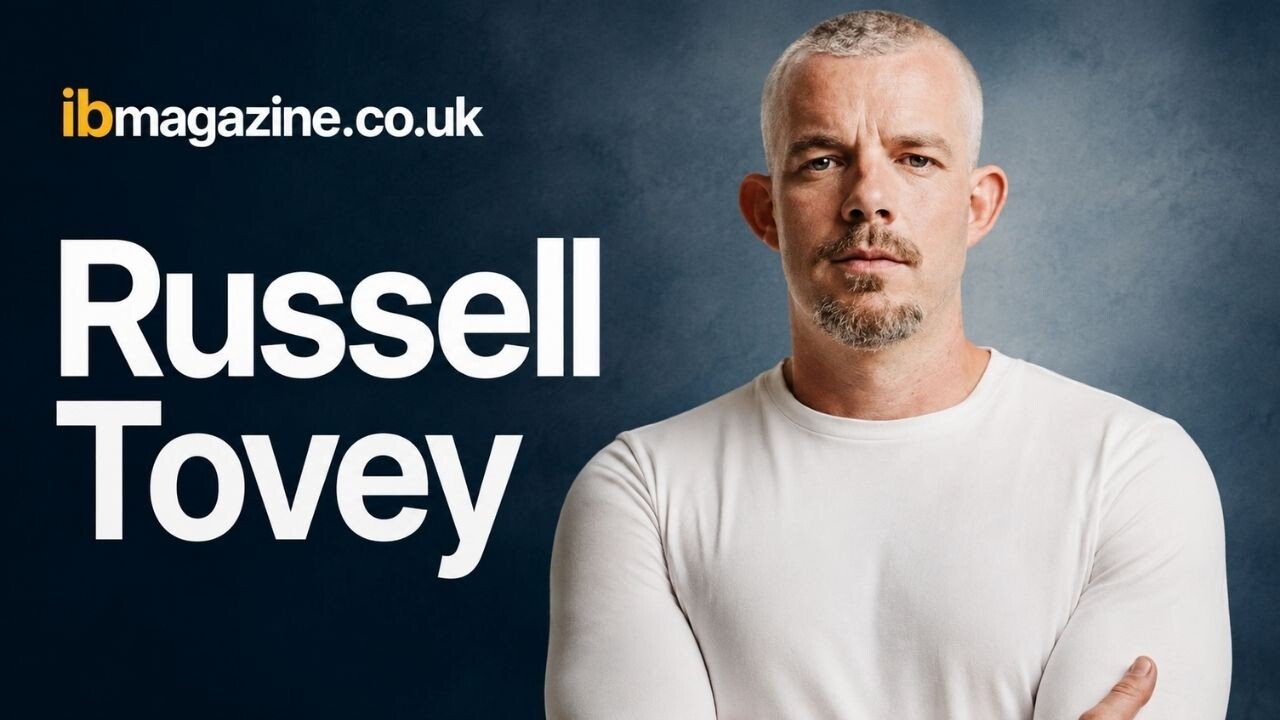
Russell Tovey’s public work in contemporary art has developed far beyond private collecting. He has built a documented role as a collector, curator, author, podcast host, public speaker and institutional judge, with projects involving Turner Contemporary, the National Portrait Gallery, GRIMM and City Lit, alongside art books published by Hachette. His own interviews also provide a clear account of how collecting changed for him: what began as an interest in owning art gradually became more connected with supporting artists, learning from them and making contemporary art easier for wider audiences to approach.
Quick Facts
| Field | Details |
|---|---|
| Full name | Russell Tovey |
| Public roles | Art collector, curator, author, podcast host and public speaker |
| Major project | Co-founder and co-host of Talk Art |
| Curatorial work | Margate NOW, Swimming and Home |
| Institutional judging | Turner Prize 2021 and National Portrait Gallery Portrait Award 2024 |
| Publishing | Co-author of three art-focused books |
| Art focus | Contemporary art, accessibility and support for artists |
| Institutional honour | City Lit Lifetime Fellowship |
How Russell Tovey Became an Art Collector
Tovey has said that he began collecting art in his mid-twenties. In a direct interview with Sotheby’s, he recalled buying a Tracey Emin monotype as an important early purchase. He described that acquisition as changing the way he thought about ownership because an artwork could remain with him and take on meaning beyond the initial purchase itself.
His collecting priorities later changed. In comments published by Turner Contemporary in 2019, he explained that the appeal had moved away from simply owning objects and towards supporting emerging and mid-career artists. He also spoke about becoming more involved with not-for-profit art institutions.
That development is important to understanding his later public work. In a Frieze interview in 2020, Tovey described the excitement of discovering an artist and potentially helping to create momentum around that person’s work. By 2025, in a conversation with CULTURED, he was speaking more explicitly about collecting with a stronger sense of purpose, including greater attention to queer artists.
Publisher descriptions have placed his collection at around or above 300 works at different points, but those figures relate to different dates rather than a confirmed current total.
How Talk Art Expanded His Public Role
A major shift came with the launch of Talk Art with gallerist Robert Diament on 19 October 2018. The project was created around conversations with artists, curators, gallerists and others connected with visual culture, with an emphasis on making contemporary art easier to discuss and understand.
Tovey has said that the project changed his own relationship with art. In his 2021 Sotheby’s interview, he described art as becoming part of everyday conversation rather than something centred only on acquisition. That change helps explain why Talk Art developed into a broader public platform rather than remaining simply a podcast about collecting.
The project later expanded into publishing. Tovey and Diament co-authored Talk Art in 2021, followed by Talk Art: The Interviews in 2023. The second volume drew on 24 conversations from the programme and extended the project’s discussion of contemporary art into book form.
Their work moved towards younger readers with Art School (in a book): A Future Artist’s Guide to Contemporary Art, illustrated by Rose Blake. One Hachette edition was published on 23 October 2025, while another edition is listed with a December publication date, reflecting separate edition-specific publisher records.
As of 2026, the official Acast programme page continued to credit both Russell Tovey and Robert Diament as hosts of Talk Art. Some recent episodes have been presented by Diament alone, but there has been no verified announcement that Tovey has left the project.
Moving From Collecting Into Curatorial Work
Tovey’s transition into formal curatorial activity became particularly visible in 2019, when Turner Contemporary appointed him guest curator of Margate NOW. The town-wide visual arts programme was organised alongside Turner Prize 2019 activity in Margate and involved a large number of artists and participating organisations.
His role formed part of a wider collaborative programme rather than an individual project created entirely by him. Even so, the appointment represented a significant move from private collecting into public curatorial responsibility.
He later curated Swimming for GRIMM in Amsterdam. The group exhibition ran from 28 November 2024 to 11 January 2025 and brought together work by a range of contemporary artists. The gallery also published curatorial text credited to Tovey, providing direct confirmation of his involvement.
Another curatorial project followed in London in 2025. City Lit confirmed that he curated Home, an exhibition featuring work from its Art School community.
The exhibition ran from 5 to 16 June 2025 and explored ideas connected with identity, belonging and home through the work selected from the college’s creative community.
These projects place his curatorial work across different settings: a town-wide arts programme, a commercial gallery and an educational institution.
Recognition Within Major Art Institutions
Tovey’s art-world involvement has also included formal judging responsibilities. He served on the Turner Prize 2021 jury alongside Aaron Cezar, Kim McAleese and Zoé Whitley, with Tate Britain director Alex Farquharson chairing the panel.
In 2024, the National Portrait Gallery included him on the judging panel for the Herbert Smith Freehills Portrait Award. That role placed him within another major institutional process focused on evaluating contemporary visual work.
City Lit added a different form of recognition in 2025 by awarding him a Lifetime Fellowship. The institution marked the honour with a public conversation on 13 June 2025, during the period in which his Home exhibition was being shown.
His professional representation also now lists podcasting and public speaking as distinct areas of his work. Independent Talent’s current profile records his art collecting, publishing, judging and curatorial activity alongside his podcasting and public-speaking work.
Supporting Artists and Making Art More Accessible
Accessibility has become a recurring theme in Tovey’s public work. Talk Art was established around the idea that contemporary art should be discussable without requiring specialist knowledge, and the first book developed that same approach for readers.
His direct comments about collecting also emphasise support for artists. Rather than describing collecting only in terms of ownership, he has spoken about discovering artists, following their work and potentially helping them gain momentum.
By 2025, he was describing his collecting with a clearer sense of purpose. In his CULTURED conversation, he referred to greater support for queer artists as part of the way his interests had developed.
Art School (in a book) extended the accessibility theme towards children and younger readers, introducing contemporary art in a format intended for people beginning to engage with the subject.
His work with City Lit also fitted that pattern. Curating Home from the institution’s Art School community placed attention on work produced within an educational environment rather than only on established names or high-profile collections.
How His Views on Art Have Changed Over Time
Tovey has credited Talk Art with changing the way art fits into his everyday life, making conversation about art part of the experience rather than leaving collecting as a private activity.
In a 2020 Guardian interview, he also spoke about becoming more comfortable with openly expressing the subjects that interested him. He recalled that his parents encouraged his interests when he was young, while at school he sometimes played down his intelligence or enthusiasm in order to fit in. He said he became happier once he stopped apologising for what interested him.
During the pandemic, he told Artnet News that creative work gave him a way to channel anxiety into something he cared about.
By 2025, he was speaking more explicitly about whom his collecting could support, including queer artists.
Russell Tovey’s Broader Public Work
Tovey has also used public platforms to address issues beyond collecting and curating. In a 2021 Guardian interview, he spoke directly about the impact of Section 28 on people of his generation and described the enduring effect of growing up under its restrictive social messages.
In 2023, Stonewall listed him among the public figures supporting a collective letter calling for government action against conversion practices. The campaign was organised by Stonewall, so the detailed wording belonged to the collective advocacy initiative rather than to Tovey individually.
His support for queer artists has also become part of his comments about collecting. In 2025, he described a stronger interest in using his collection to support queer artistic histories and voices.
His public participation in specialist art discussions has continued as well. Sotheby’s recorded him taking part in a London conversation about British studio ceramics in June 2025 alongside Tamsin Golding Yee, Abi Shapiro and Florian Gadsby. That discussion was released in February 2026 as part of Sotheby’s Talks.
Russell Tovey’s Continuing Place in Contemporary Art
Russell Tovey’s involvement with contemporary art can now be traced through several distinct roles rather than a single collecting interest. He began buying art in his twenties, later co-founded Talk Art, moved into publishing and curatorial work, and has served on judging panels for major British art institutions.
Projects including Margate NOW, Swimming and Home demonstrate that his curatorial activity has continued across different settings. His publishing work, institutional judging and public conversations have added further dimensions to that role.
His own descriptions of collecting have changed alongside this professional development. What began as an interest in owning meaningful works became increasingly connected with supporting artists and encouraging wider engagement with art.
You may also read: Nadia El-Nakla Combines Dundee Civic Work with Psychotherapy.
1 Comment