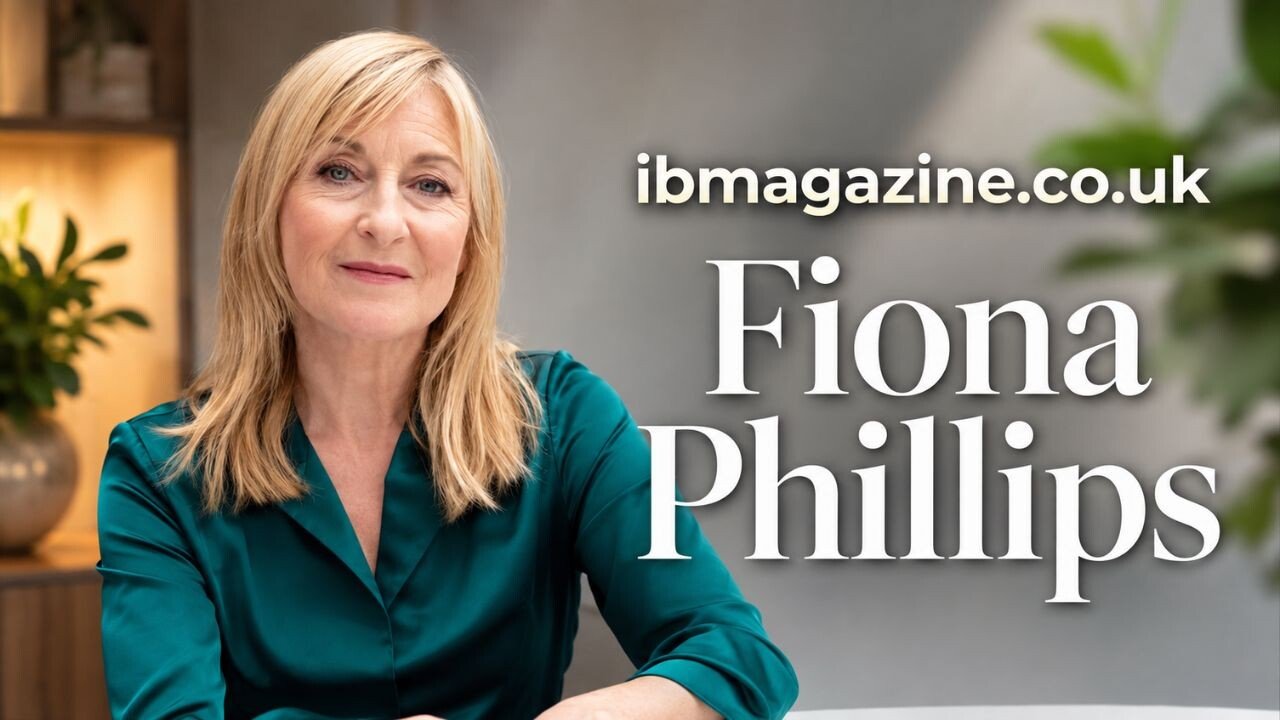
Fiona Phillips built a long career in British broadcasting before family responsibilities and, later, her own experience of Alzheimer’s disease changed the direction of her public life. Her professional history includes local radio, regional broadcasting, national news work and many years in breakfast television.
Her later public work has become closely connected with dementia awareness. Phillips has spoken directly about caring for parents affected by dementia, receiving an early-onset Alzheimer’s diagnosis herself and using her position as an Alzheimer’s Society ambassador to call for greater research support. She also documented her experience in a memoir published in 2025.
| Field | Details |
|---|---|
| Full name | Fiona Phillips |
| Profession | Broadcaster and journalist |
| Birthplace | Canterbury, Kent, England |
| Education | Trained as a radiographer before studying English and journalism |
| Broadcasting background | Local radio, regional BBC television, Sky News and breakfast television |
| Spouse | Martin Frizell |
| Children | Two sons |
| Public role | Long-standing Alzheimer’s Society ambassador |
| Advocacy | Dementia awareness and research funding |
| Published work | Memoir about living with Alzheimer’s |
From Education to a Career in Broadcasting
Phillips grew up with two brothers, first in Canterbury and later in Southampton. She has spoken openly about not doing particularly well academically at school. In a later interview, she recalled initially achieving only one O-level before returning to education and retaking examinations.
Her route into broadcasting was not immediate. She qualified as a radiographer, then completed an English degree and studied journalism. That combination of education and professional retraining preceded her move into media work.
Her earliest broadcasting experience included positions at local radio stations County Sound, Hereward Radio and Radio Mercury. She later moved into regional BBC television as a co-presenter before working as a reporter for Sky News.
That progression gave her experience across radio, regional television and national news before she became more widely associated with breakfast broadcasting.
Building Her Profile in Breakfast Television
Phillips joined GMTV in 1993 as an entertainment correspondent. She subsequently spent two years working as its Los Angeles correspondent before becoming one of the programme’s principal presenters during the mid-1990s.
Sources differ slightly over the precise beginning of her main presenting role. The Guardian places it in 1996, while Woman & Home gives 1997. What is clear is that she had already joined the programme several years earlier and had moved into a central presenting position by that period.
Phillips later described her presenting approach as deliberately conversational. In a 2007 interview, she explained that she did not believe presenters should create an artificial distance between themselves and viewers. She accepted that occasional verbal mistakes could happen as part of ordinary, unscripted conversation.
Her account offers a useful explanation for the informal style associated with her breakfast television work without relying on assumptions about her personality away from the screen.
Why Fiona Phillips Stepped Away From GMTV
Phillips announced in 2008 that she would leave her regular GMTV role at the end of that year. Her decision was closely connected with responsibilities outside work rather than a complete withdrawal from broadcasting.
At the time, she said her children, home life and elderly father required more attention. She was dealing with the demands of a high-profile breakfast television schedule while also caring for family members affected by illness.
In a 2010 interview, Phillips described herself as part of the “sandwich generation”, referring to the experience of caring for young children and ageing parents simultaneously. She spoke about the pressure of trying to maintain her career, marriage and family responsibilities while her parents were experiencing dementia.
She later said leaving GMTV had been the right decision for her circumstances. The move did not amount to retirement. Phillips continued working in television, radio and journalism, but said she gained greater control over her timetable and could choose work more selectively.
She also spoke later about workplace inequality during her television career. In a first-person newspaper column, she said she had been paid substantially less than Eamonn Holmes and had needed to challenge her employer over maternity pay. Those claims came from Phillips herself rather than independently published employment records.
Dementia Within Her Family and Her Own Diagnosis
Dementia had affected Phillips’s family long before her own diagnosis. Alzheimer’s Society has confirmed that her late mother, father and uncle experienced dementia. Phillips has also spoken about dementia affecting other relatives.
Her mother died in 2006, while her father’s condition became part of the caring responsibilities she discussed publicly during the following years. Those experiences eventually became central to her advocacy work.
Phillips was diagnosed with early-onset Alzheimer’s disease in early 2022, when she was 61. She did not make the diagnosis public immediately and disclosed it in July 2023.
Some later reports have described 2023 as the year of diagnosis, but the stronger chronology from ITV, her publisher and other reporting places the medical diagnosis in 2022 and the public announcement the following year.
Phillips has described symptoms including fatigue, anxiety, confusion and brain fog. She initially thought some of these changes might be connected with menopause and tried hormone replacement therapy. When that did not resolve the problem, she was referred for further assessment at University College Hospital in London.
How Phillips Has Spoken About Living With Alzheimer’s
After revealing her diagnosis, Phillips spoke directly about how she wanted to approach life with the condition. In a 2023 interview, she stressed that she still regarded herself as the same person and did not want Alzheimer’s to dominate her identity.
At the time of her public disclosure, she described continuing ordinary activities including meeting friends for coffee, going out for dinner with Martin Frizell and walking regularly. Those comments provide a picture of her routine in 2023 rather than a description of her present circumstances.
Family response was another subject she addressed herself. Phillips said she had worried that her sons, Nathaniel and Mackenzie, might become frightened or begin treating her differently after learning about the diagnosis. Instead, she described them as supportive and said they had become more openly affectionate towards her.
Her comments about family life followed years of speaking publicly about caring responsibilities. She and Frizell married in 1997, and their two sons were born several years later. Phillips’s earlier decision to reduce her breakfast television commitments had already been shaped by the competing demands of parenting and caring for her father.
Turning Personal Experience Into Dementia Advocacy
Phillips had a connection with Alzheimer’s advocacy before making her own diagnosis public. Alzheimer’s Society identifies her as a long-standing ambassador, a role grounded in her family’s experience of dementia.
Following her diagnosis, that work gained a new personal dimension. On World Alzheimer’s Day in 2023, she called for more funding for dementia research and spoke about the urgent need to improve understanding and treatment.
She also confirmed that she was taking part in a drug trial at University College London Hospitals. The available official material establishes her participation but does not identify a personal treatment outcome or demonstrate that an experimental medicine improved her condition.
Phillips has framed her public work around helping other people affected by Alzheimer’s and encouraging further research. Her public statements have focused on lived experience, dementia campaigning and support for further research.
Remember When and Her Public Account of Alzheimer’s
In July 2025, Phillips published Remember When: My Life with Alzheimer’s, produced with help from her husband Martin Frizell and journalist Alison Phillips.
The memoir gave her a longer format in which to describe her experience of Alzheimer’s and the impact it had on her life. Her publisher recorded her hope that the book could help people in the early stages of the condition feel less alone.
The final publisher listing gives 17 July 2025 as the publication date. An earlier announcement had planned a 3 July release, indicating that the timetable changed before publication.
Pan Macmillan later identified the memoir as a Sunday Times No. 1 bestseller as of 29 July 2025. No audited lifetime sales figure was provided, but the bestseller status is confirmed by the publisher.
Recent Public Updates
Phillips made a brief public appearance in a video shared through Martin Frizell’s Instagram account in July 2025. In the recording, she thanked readers for supporting her memoir. The short message was one of her clearest personal public communications following the book’s publication.
In February 2026, Frizell appeared on ITV and spoke about his wife’s condition and the effect Alzheimer’s continued to have on their family. His comments provided a first-hand update from her husband and principal carer, rather than a medical assessment or a statement directly from Phillips.
Frizell continued discussing dementia care publicly in July 2026, when he shared a new photograph of his wife and called for stronger social-care support. Those comments represented his own advocacy and should be distinguished from positions Phillips has personally expressed.
The most recent public material therefore comes from a mixture of Phillips’s own limited appearances and accounts given by her husband.
Fiona Phillips’s Continuing Public Legacy
Fiona Phillips’s public record spans several distinct stages: an unconventional route through education, early work in radio and news, a prominent period in breakfast broadcasting and a later shift towards work shaped by family responsibilities.
Dementia became part of that public story first through her experience of caring for relatives and later through her own early-onset Alzheimer’s diagnosis. She has spoken directly about the practical and emotional changes involved while continuing her established association with Alzheimer’s Society.
Her advocacy, participation in research and 2025 memoir have extended her public work beyond broadcasting. The verified record presents a career that changed significantly as her family priorities and personal circumstances changed, while her more recent work has concentrated on dementia awareness and research.
You may also read: Magnus Walker on Porsche Collecting and Automotive Design.