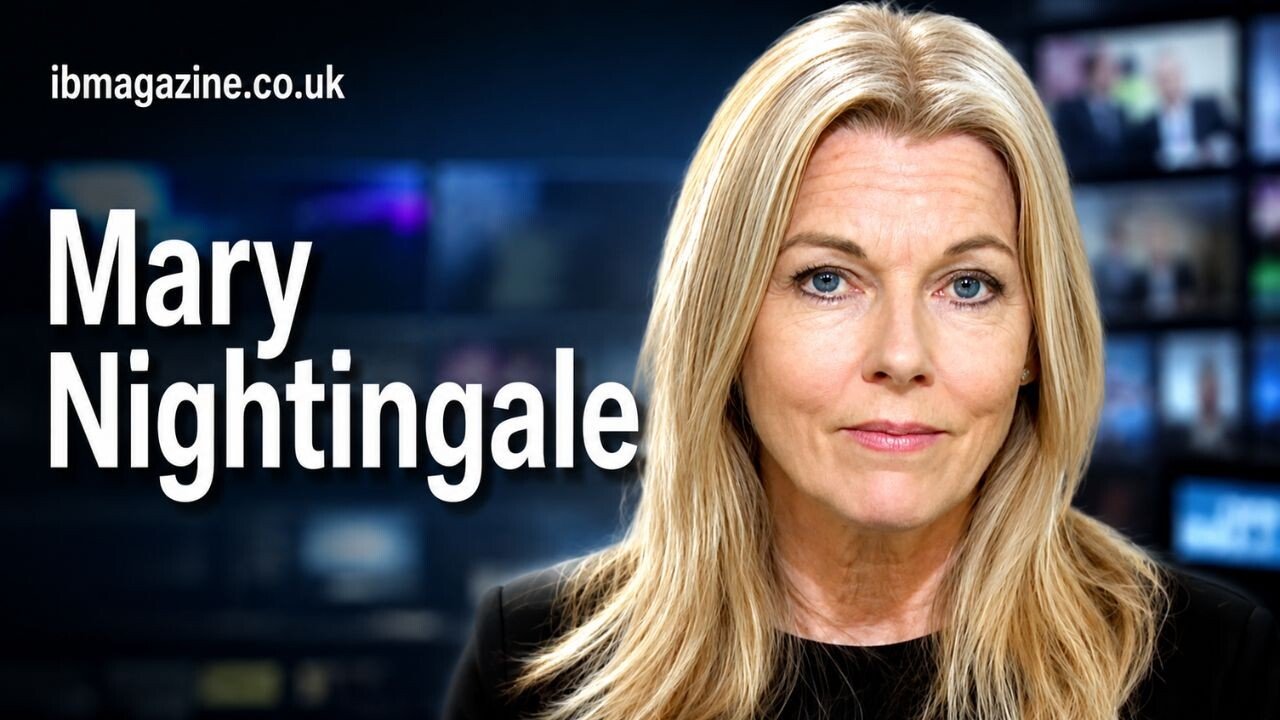
Mary Nightingale has spent more than three decades working in journalism, with much of her public career centred on national news at ITV. Her route into broadcasting was not immediate: after studying English at Bedford College, she worked in the City before moving into journalism in 1990, initially covering business for TV Tokyo before working with BBC World Service Television.
Her career also provides a documented perspective on the changing position of women in broadcasting. Nightingale has spoken directly about sexism in earlier newsrooms, the difficulties women can face when combining motherhood with long-term careers, and the different expectations applied to ageing male and female presenters. As of August 2026, ITV continued to list her as a presenter of its national evening news.
| Field | Details |
|---|---|
| Full name | Mary Louise Nightingale |
| Nationality | British |
| Profession | Journalist and news presenter |
| Education | BA in English from Bedford College |
| Current broadcaster | ITV |
| Professional recognition | Two TRIC Newscaster of the Year awards |
| Charity role | Patron of Rainbow Trust Children’s Charity |
From the City to Broadcast Journalism
Nightingale completed a BA in English at Bedford College, with Royal Holloway’s alumni records identifying her as a 1985 graduate. Her professional life initially developed outside journalism.
According to her representative Noel Gay, she worked on Eurobond trading floors in the City during the 1980s. She moved into journalism in 1990, initially writing and presenting business coverage for TV Tokyo. She subsequently gained experience with BBC World Service Television.
That background gave her early experience in financial broadcasting before she moved towards national television news. Her move from the City into journalism became the first major professional transition in a broadcasting career that would later become closely associated with ITV.
Building a Long-Term Career at ITV News
Nightingale’s representative records that she joined ITN in 2000. Contemporary reporting from January 2001 then documented her promotion to ITV’s national evening news operation alongside Dermot Murnaghan.
Her role developed into a long-term position at the centre of the broadcaster’s national news coverage. When ITV expanded its evening national and international bulletin to an hour in March 2022, the broadcaster confirmed that Nightingale would remain one of the key presenters of the extended programme.
Professional recognition came relatively early in this period. Royal Holloway records that she received the Television and Radio Industries Club’s Newscaster of the Year award in 2002 and again in 2004. ITV’s own profile also confirms that she has received the honour twice.
By August 2026, ITV was still identifying her as a presenter of its national evening news, placing her career at the broadcaster across more than two decades of major changes in television journalism.
How Mary Nightingale Approaches Live News
Nightingale has provided unusually specific first-hand descriptions of how major live broadcasts differ from routine scripted news presentation.
After ITV’s coverage of the 2001 general election, she explained that the team had identified important constituencies before the programme began. That preparation became particularly important because election-night coverage required her to react to developments without relying on an autocue in the way a conventional bulletin might.
She described the experience as one that demanded constant attention and the ability to think quickly while information was changing. She also acknowledged the fatigue involved in working through the night and was candid about making mistakes during the broadcast.
Her comments after the programme were notably self-critical. She said she was reluctant to watch the coverage back because she knew she would concentrate on errors she had made. The remark offers a direct account of how she assessed her own work without requiring broader assumptions about her personality.
That emphasis on listening and preparation was also visible during the 2019 UK general election campaign. Writing for ITV News, Nightingale described travelling around the country to hear from voters outside Westminster. She was careful to note that those conversations were not a scientific poll, distinguishing informal reporting from formal evidence about public opinion.
Mary Nightingale on Women in Broadcasting
One of the clearest areas in which Nightingale has spoken beyond day-to-day reporting is the position of women in television journalism.
In a first-person article published in 2015, she recalled entering television journalism with the expectation that women of her generation would be able to build long careers in the profession. She also described earlier newsroom environments in which women encountered patronising and inappropriate behaviour that she believed would no longer be accepted in the same way.
Her comments did not focus only on conditions at the beginning of a career. She identified motherhood as another stage at which professional equality could become difficult. Nightingale argued that employers needed to find ways for journalists to combine raising children with maintaining long-term careers.
She also addressed ageing and on-screen expectations. At the time, she questioned why female presenters appeared to face different standards from their male colleagues as they grew older. Her position was that credibility and professional ability should determine whether someone remains on screen rather than assumptions based on age or appearance.
These views came from Nightingale herself and were rooted in her experience of a long television career. They provide a direct record of how she viewed changes in the industry while also identifying areas where she believed inequality remained.
Family Experience and Its Influence on Her Priorities
Nightingale has two children, Molly and Joe, whose names she confirmed directly in a first-person account of a family trip published in 2013. The Telegraph had previously reported Molly’s birth in January 2003.
In that later article, Nightingale wrote about a significant change in her priorities following the unexpected death of her mother during the summer of 2012. She said the loss reinforced for her how short life could be and contributed to her decision to take an extended break with her family.
The resulting six-week journey came at a time when her children were still young. Nightingale explained that she wanted the family to have that experience before examinations and other commitments made such a long break more difficult.
Her account concentrated on ordinary family routines rather than celebrity lifestyle details. She described driving, preparing their campervan, managing homework and sharing everyday responsibilities. She also enjoyed temporarily leaving behind the formal appearance expected in television presentation and being able to dress casually.
The account provides a direct record of how bereavement affected a specific decision in her family life. It does not establish a permanent lifestyle pattern, but it does document a period when she deliberately placed extended family time ahead of her usual working routine.
Public Work Beyond the News Desk
Nightingale’s public work includes a confirmed charitable role with Rainbow Trust Children’s Charity, which supports families caring for seriously ill children. The organisation continues to list her as a patron.
In a statement published by the charity, she connected her support directly with her experience as a mother. She explained that parenthood gave her a particular affinity with families facing serious childhood illness.
Her journalism has also taken her beyond studio presentation. In May 2026, she returned to the story of Mark Prince, whom she had first met in 2006 following the death of his son Kiyan. Twenty years later, Nightingale reported on Prince’s work with young people through the Kiyan Prince Foundation.
In March 2026, she interviewed Veterans Minister Louise Sandher-Jones about government support for former service personnel affected by blast-related traumatic brain injury. The interview formed part of her continuing public-interest reporting.
Another significant public issue arose in 2024 when an AI-manipulated video used Nightingale’s image and apparent voice to promote an investment application. Speaking to ITV Cymru in March that year, she said the misuse made her extremely angry and described the appropriation of her identity as theft.
Her comments addressed that specific deepfake incident rather than representing a general statement about artificial intelligence.
A Career Still Active in 2026
Mary Nightingale remained professionally active well into 2026. As of August 2026, ITV continued to identify her as a presenter of its national evening news.
Her work during the year was not limited to reading news from the studio. The May report involving Mark Prince showed her returning to a subject she had first encountered two decades earlier, while the March interview on veterans’ brain injuries involved questioning a government minister about a developing public-policy issue.
ITV’s profile listed the May 2026 Mark Prince report among her recent work, providing a documented example of original reporting under her byline.
Her public role with Rainbow Trust also remained current, with the charity continuing to list her among its patrons in 2026.
Mary Nightingale’s Place in British News Broadcasting
Mary Nightingale’s documented career combines a professional transition from the City into journalism, long-term work in national television news and direct experience of major live broadcasts. Since moving into journalism in 1990, she has worked across business reporting, election broadcasting and national evening news.
Her own writing adds another dimension to that record. She has discussed sexism in earlier newsrooms, the challenge of combining motherhood with a sustained journalism career, and the unequal standards that can affect older women on television. She has also spoken openly about the preparation and pressure involved in unscripted live broadcasting.
As of August 2026, she remained part of ITV’s national news operation while continuing to take on reporting and interview work beyond the studio. Her verified public record combines professional longevity with directly expressed views about how women can remain visible and credible throughout long careers in broadcasting.
You may also read: Tom Holland Built BERO After Choosing an Alcohol-Free Life.