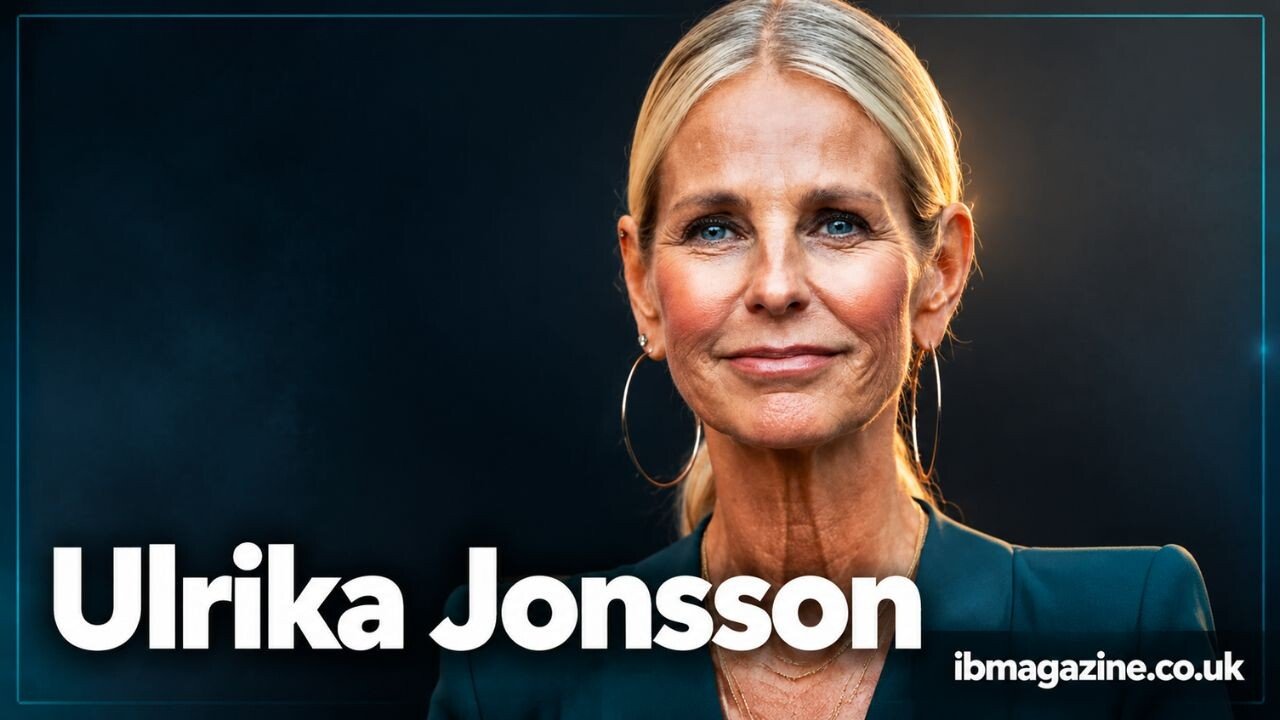
Ulrika Jonsson built a prominent British broadcasting career after moving from Sweden to Britain as a child. She entered television through secretarial work, became a weather presenter in 1989 and later secured presenting roles that made her widely recognisable during the 1990s.
Her own account of that period is more complicated than a straightforward story of television success. She has described the anxiety caused by intense attention, the effect of press intrusion and her decision to reduce her workload partly for her children. More recently, she has spoken directly about depression, trauma, ageing and her decision to stop drinking.
| Field | Details |
|---|---|
| Public name | Ulrika Jonsson |
| Born | 16 August 1967 |
| Birth country | Sweden |
| Moved to Britain | At the age of 12 |
| Profession | Television presenter, author and columnist |
| Television career | Began at TV-am in 1989 |
| Children | Four |
| Published work | Autobiography and fiction |
| Recent milestone | Marked two years without alcohol in June 2026 |
Her Swedish Childhood Preceded a British Broadcasting Career
Born on 16 August 1967, Jonsson spent the first 12 years of her life in Sweden. Professional profiles differ slightly over her exact birthplace: some identify Sollentuna in Stockholm County, while another gives Stockholm. Without a civil record resolving that variation, Sweden remains the firmly established location.
Jonsson has said that her mother left when she was eight and that she joined her in Britain four years later. She described her father, a driving instructor, as someone she loved but regarded as irresponsible. That divided childhood preceded the responsibilities she later associated with caring for other people.
She initially hoped to pursue acting, but her mother encouraged her towards secretarial work. Jonsson became personal assistant to television executive Bruce Gyngell, and established professional profiles place her move in front of the camera as a TV-am weather presenter in 1989. Her broadcasting career therefore began behind the scenes before she moved on screen.
Television Success Made Her Widely Recognisable
Jonsson’s public profile expanded rapidly during the early 1990s. From 1992, she presented a British sports-entertainment format built around physical contests and large studio audiences. She later became a regular team captain on an improvised comedy panel programme, adding a less formal type of broadcasting to her work.
In May 1998, she and Terry Wogan co-presented a major European live broadcast from Birmingham. The European Broadcasting Union’s official archive records the event, providing institutional confirmation of one of her largest international presenting assignments.
Her television record later moved beyond presenting. Contemporary reputable reporting documented her victory in a celebrity reality competition in January 2009, when she received a reported 56.7 per cent of the final public vote.
These roles placed her across several distinct formats: live presentation, sports entertainment, comedy and reality television. She subsequently continued to make selected television appearances, including a demanding challenge programme in 2021, which Channel 4 officially documented.
Fame Brought Anxiety and Press Intrusion
Although television made Jonsson highly visible, she has rejected the idea that peak fame was an entirely positive experience. In a 2020 interview, she recalled shaking, a racing heart and anxiety when photographers followed her. She characterised the period as intense and said she did not cope with it particularly well.
Press attention extended into her health, family and private relationships. In an earlier interview, she discussed information supplied by police suggesting that her phone might have been hacked. She also described reported attempts by journalists to obtain private records, including medical information and telephone bills.
News Group Newspapers later settled legal claims involving Jonsson and expressed regret for the distress caused, according to reputable contemporary coverage. That later development gives important context to her first-person account, although the newspaper interviews themselves were not police or court records.
Looking back, she said categorically that she did not miss the most intense phase of her fame. Her comments do not amount to a rejection of broadcasting itself; she continued to appear on television and write publicly. They instead distinguish professional work from the intrusive attention surrounding it.
Motherhood Influenced Her Professional Priorities
Jonsson is the mother of four children: Cameron, Bo, Martha and Malcolm. Birthday messages posted through her own Instagram account established that they were aged between 18 and 31 by August 2026.
She has discussed family structure without presenting conventionality as the measure of a successful home. In a direct interview in 2008, she said that her children’s happiness and security were more important than whether the family fitted a traditional model. Love, stability and the welfare of the children were her stated priorities.
Motherhood also influenced her professional decisions. Jonsson later explained that she reduced her television workload partly because she wanted to spend more time with her children. The changing nature of the opportunities offered to her was another factor, so her reduced presence cannot be attributed to a single decision or event.
Her public comments about caregiving extend beyond motherhood. In 2021, she said that she had spent much of her life looking after her father, her siblings and then her four children. She did not identify her siblings publicly in that account, and dependable sources do not establish their names or number.
Writing and Later Programmes Extended Her Public Work
Broadcasting remained central to Jonsson’s profile, but it was not her only published work. Her autobiographical book, Honest, first appeared in 2002. A later edition accounts for some catalogues using 2003 instead of the original publication year.
She moved into fiction with The Importance of Being Myrtle, officially published by Penguin Books UK on 1 September 2011. The two books gave her a documented record in both autobiography and fiction rather than limiting her published work to newspaper commentary.
Her later public activity included selected television appearances and first-person columns. In those columns, she has written about ageing, relationships, sobriety and the expectations placed on women. Her publisher continued to maintain an archive under her byline in August 2026.
Instagram has become her most active direct public channel. She uses it for family milestones, food, personal reflections and clearly labelled commercial partnerships. Its audience stood at approximately 236,000 during the research period, although follower totals naturally change.
Home Life and Everyday Habits Supported Her Wellbeing
Jonsson has called herself a homebody and described being highly houseproud. She explained that maintaining order in her surroundings supports her mental wellbeing, presenting domestic organisation as a source of reassurance rather than simply an aesthetic preference.
Cooking occupies a similar place in her routine. She has described herself as someone who enjoys feeding other people, and food remains a regular subject on her public account. The activity combines a practical daily habit with the care she associates with family and friendship.
Her discussion of depression has been candid but specific. Jonsson has spoken about previous therapy and antidepressant use without presenting a complete clinical history. She identified friendships, cooking and walking her rescue dogs as practical forms of support during difficult periods.
The dogs also encouraged her to leave the house and walk when depression made that harder. Her comments provide a first-person account of the routines that helped her, rather than a general prescription for treating mental-health conditions.
She Challenged Expectations Placed on Older Women
Jonsson has described herself as feminist “at heart” and has repeatedly questioned how ageing women are treated in public life. She has objected to the expectation that women should become less visible as they grow older or disguise every physical sign of age.
Her Swedish childhood influenced that position. Jonsson recalled seeing older women with grey hair, wrinkles and natural faces, giving her an early example of ageing that was not entirely organised around concealment.
In a 2025 first-person piece, she argued that wrinkles should not outweigh qualities such as intelligence and kindness. Her position was not that appearance had no personal significance, but that it should not determine a woman’s value or public relevance.
During 2026, she entered a clearly labelled advertising collaboration with Define Clinic for a personalised, non-surgical skincare programme. She said that her aim was to look the best she could for her age rather than turn back time. Because the material formed part of a commercial campaign, it documents the collaboration and her stated intention without independently establishing the effectiveness of the treatments.
Personal Struggles Became Part of Her Public Conversation
Jonsson has spoken directly about experiencing sexual violence as a teenager and domestic abuse later in life. Her public account of the teenage assault did not identify anyone as the perpetrator.
She also discussed why reporting an historical sexual offence can remain difficult, including concerns about evidence and the likelihood of prosecution. Her statements were personal testimony rather than a legal finding, but they formed part of a wider public conversation about the obstacles survivors may encounter.
In separate sobriety interviews, Jonsson said that drinking had helped her suppress trauma and emotions she had not fully confronted. She described sobriety as requiring greater emotional honesty rather than erasing the difficulties behind her drinking.
Sobriety Marked a Significant Change in Her Life
Jonsson’s alcohol-free period began in early June 2024. During podcast interviews in 2025, she discussed the emotional roots of her drinking and identified lockdown as an important point in how she understood its place in her life.
She described sobriety as more than abstaining from alcohol. Her account included emotional awareness, new habits, support from other people and learning more about herself without using drink to mask difficult feelings. She also connected the change with looking after herself for her own sake and for her children.
On 4 June 2026, Jonsson announced through Instagram that she had reached two years without alcohol. The post supplied the clearest recent confirmation of the milestone directly from her.
Her public discussions have focused on personal experience rather than universal advice. Shame, self-discovery and emotional responsibility appeared repeatedly in her interviews, alongside the freedom she associated with no longer drinking.
Her Public Story Now Extends Beyond Television Fame
Her later interviews provide important context for a career once defined primarily by high-profile broadcasting. They place professional success alongside the anxiety of public scrutiny and the family priorities that led her to reduce her television schedule.
Writing, selected screen appearances and newspaper columns broadened her public work. Motherhood, domestic routines and her views on women’s visibility added further context to the choices she made.
Her most clearly documented recent change is sobriety. By June 2026, she had completed two years without alcohol and had spoken directly about the trauma, habits and emotional work involved. Those accounts now sit alongside, rather than beneath, the fame that first made her widely known.
You may also read: Brian Harvey’s Career From East 17 to Solo Chart Success.